
7 Personalization Myths Debunked for Savvy Marketers
Most American marketers still believe personalization demands complex setups and endless data, but the truth is much simpler and more accessible. For CRO professionals aiming to improve A/B testing and user engagement, breaking free from these myths is critical. Simple strategies and focused segmentation consistently outperform overengineered solutions. This guide helps you challenge outdated assumptions and discover smarter, results-driven personalization tactics that actually work for small and medium-sized businesses.
Table of Contents
- 1. Personalization Must Be Complicated to Work
- 2. Only Big Data Powers Effective Personalization
- 3. Personalization Hurts Website Performance
- 4. Automated Personalization Neglects User Privacy
- 5. A/B Testing and Personalization Can't Work Together
- 6. One-to-One Personalization Is Always Best
- 7. Personalization Is Only for E-commerce Sites
Quick Summary
| Key Message | Explanation |
|---|---|
| 1. Personalization Can Be Simple | Effective personalization relies more on understanding user needs than complex systems. Straightforward strategies often yield stronger engagement. |
| 2. Quality Data Over Quantity | Focus on relevant, minimal data instead of large datasets. Prioritize actionable insights that improve user experience. |
| 3. Personalization Doesn't Slow Websites | Intelligent personalization can enhance user experiences without affecting website speed. Use lightweight technologies to ensure quick load times. |
| 4. Ethical Automation Is Possible | Automated personalization can respect user privacy through transparency and meaningful choices in data collection. Communicate clearly with users about data usage. |
| 5. Personalization Is For All Industries | Personalization benefits various sectors beyond e-commerce. Understand your audience segments and tailor experiences to meet their specific needs. |
1. Personalization Must Be Complicated to Work
Busting the myth that personalization requires complex algorithms and intricate systems starts here. Many marketers believe effective personalization demands sophisticated technology, but the reality is far simpler. Targeted experiences can be powerful even with straightforward strategies.
Research from complexity theory reveals that personalization success depends more on understanding user needs than implementing elaborate systems. In fact, some academic studies demonstrate that simple, well-aligned personalization efforts can generate significant user engagement.
Think about personalization like cooking. You do not need every fancy kitchen gadget to create an excellent meal. Similarly, marketing personalization works best when you focus on core user preferences rather than overengineering your approach. Small, meaningful customizations often outperform complex, generic experiences.
Implementing personalization can start with basic segmentation strategies. Group your audience by key characteristics like location, browsing behavior, or purchase history. Then craft targeted messages that speak directly to those specific groups. This approach requires minimal technical complexity but delivers maximum impact.
Pro tip: Begin with one or two simple personalization tactics and measure their performance before expanding. Track metrics like click through rates and conversion increases to validate your approach and gradually refine your strategy.
2. Only Big Data Powers Effective Personalization
The common misconception that personalization requires massive data sets is not just misleading but can actually hinder your marketing strategy. Effective personalization is about quality and relevance, not data volume.
Research across multiple countries highlights an important truth about algorithmic personalization: consumers value targeted experiences that respect their privacy and use minimal personal information. Large data repositories are not a prerequisite for meaningful engagement.
Successful personalization starts with understanding core user preferences. This means segmenting your audience based on clear behavioral patterns or specific interests rather than collecting unnecessary data points. Smart personalization focuses on actionable insights, not data hoarding.
For example, an ecommerce site can create personalized recommendations by tracking recent purchases, browsing history, and explicitly stated preferences. This approach requires far less data than complex algorithmic models while still delivering highly relevant experiences.
Instead of accumulating extensive user profiles, concentrate on collecting targeted information that directly improves user experience. Marketing decisions powered by precise data can transform how you connect with your audience.
Pro tip: Start small by identifying 2-3 key user attributes that genuinely matter to your personalization strategy. Quality always trumps quantity when designing user experiences.
3. Personalization Hurts Website Performance
The fear that personalization automatically slows down websites is a myth that needs serious debunking. Strategic personalization can actually enhance user experience without compromising site speed.
Web personalization research reveals that well designed personalization strategies improve user engagement and satisfaction. The key is intelligent implementation that prioritizes performance alongside customization.
Modern personalization techniques are lightweight and can be designed to minimize performance impact. Advanced technologies now allow marketers to deliver targeted experiences without loading unnecessary scripts or complex data sets. This means you can create personalized journeys that feel seamless and fast.
Understanding how to balance personalization with performance requires smart technical choices. Select personalization tools with minimal script sizes, implement lazy loading techniques, and prioritize critical content rendering. Performance optimization and personalization are not mutually exclusive goals.
Empirical studies show that strategic content personalization can actually increase website stickiness and perceived enjoyment. By focusing on user needs and implementing efficient technologies, you can create personalized experiences that feel responsive and fast.
Pro tip: Always test your personalization implementation using performance measurement tools like Google PageSpeed Insights. Monitor load times and adjust your strategy to maintain optimal website speed while delivering targeted experiences.
4. Automated Personalization Neglects User Privacy
Contrary to popular belief, automated personalization does not inherently compromise user privacy. Ethical personalization requires transparency, user control, and strategic data practices.
Recent research on AI driven personalization reveals that consumer trust hinges on visible ethical standards and clear communication about data usage. This means marketers can create personalized experiences while respecting user boundaries.
The key to privacy conscious personalization is giving users meaningful choices. Implement clear opt in processes, provide straightforward explanations about data collection, and offer simple mechanisms for users to modify their preferences. Transparency transforms potential privacy concerns into opportunities for building trust.
Effective automated personalization starts with minimal data collection. Focus on gathering only essential information directly relevant to improving user experience. Use anonymized data points when possible, and always prioritize user consent over comprehensive tracking.
Consider personalization strategies that leverage user provided information or observable behavior patterns rather than invasive background tracking. This approach demonstrates respect for individual privacy while still delivering tailored experiences that feel relevant and engaging.
Pro tip: Conduct regular privacy audits of your personalization systems. Review data collection practices, update user consent mechanisms, and ensure your approach aligns with current privacy regulations and user expectations.
5. A/B Testing and Personalization Can't Work Together
The notion that A/B testing and personalization are incompatible is a misconception that limits marketing potential. These strategies are not opposing forces but powerful allies in delivering exceptional user experiences.
Systematic research on A/B testing reveals that testing is integral to developing and refining personalized experiences. Practitioners actively use A/B tests to validate, select, and continuously optimize personalization algorithms and features.
Think of A/B testing as the scientific method for personalization. By systematically comparing different personalized approaches, you can identify which variations resonate most with specific audience segments. This iterative process allows for data driven refinement of your personalization strategies.
Successful implementation involves creating controlled experiments that test personalized variations. For example, you might A/B test different recommendation algorithms, personalized content layouts, or targeted messaging to understand what drives user engagement most effectively. The goal is continuous learning and optimization.
Peer reviewed research in artificial intelligence confirms that A/B testing and personalization are complementary techniques. By combining these approaches, marketers can develop more sophisticated, user centric experiences that adapt based on real world performance data.
Pro tip: Start small by selecting one specific personalization element to A/B test. Track key metrics like conversion rates, engagement time, and user satisfaction to validate your personalization hypotheses.
6. One-to-One Personalization Is Always Best
The persistent myth that highly individualized personalization represents the ultimate marketing strategy needs serious reevaluation. Not every interaction requires a completely unique experience.
Comprehensive research spanning decades reveals that one-to-one personalization is not universally superior. In fact, segment-based and group-level personalization can often deliver comparable or even better results with significantly less complexity.
Strategic personalization is about finding the right balance, not creating an exhaustive individual profile for every single user. Most businesses can achieve remarkable engagement by understanding broader audience segments and their shared characteristics.
Think of personalization like restaurant service. Sometimes a carefully curated menu for a specific dining preference works better than creating a completely custom dish for every single customer. Content personalization strategies should prioritize meaningful experiences over hyper-granular targeting.
Successful personalization involves understanding user clusters that share similar behaviors, preferences, and needs. By identifying 3-5 key audience segments, you can create targeted experiences that feel relevant without requiring individually tailored interactions for every single user.
Pro tip: Focus on creating 3-4 robust audience personas that represent your primary user groups. Design personalization strategies around these personas to maximize impact while maintaining operational efficiency.
7. Personalization Is Only for E-commerce Sites
The outdated notion that personalization exclusively benefits online shopping platforms is completely false. Personalization has become a transformative strategy across multiple industries and sectors.
Multidisciplinary research reveals that personalization now extends far beyond retail, reshaping experiences in healthcare, education, entertainment, and financial services.
Consider how personalization manifests in different sectors. In healthcare, patients receive tailored treatment recommendations. Educational platforms customize learning paths based on individual student performance. Financial services provide personalized investment strategies. Each industry adapts personalization to its unique context and user needs.
Comprehensive industry benchmarks confirm that personalization is a critical differentiator across seven major global sectors. The goal is always the same: create meaningful, relevant experiences that resonate with specific user requirements.
Marketers should view personalization as a universal strategy adaptable to any context. The key is understanding your specific audience segments and designing experiences that feel intuitive and helpful, regardless of your industry.
Pro tip: Start by mapping your audience segments and identifying unique pain points. Then develop personalization strategies that address those specific needs, treating personalization as a flexible approach rather than a one size fits all solution.
Below is a comprehensive table summarizing the myths about personalization and the clarified realities as discussed in the article.
| Myth | Reality | Key Insights |
|---|---|---|
| Personalization must be complicated to work | Simple yet targeted strategies can effectively address user needs. | Focus on core preferences and start with basic segmentation tactics. |
| Only big data powers effective personalization | Effective personalization is about relevance and core user understanding, not data volume. | Prioritize actionable insights over hoarding extensive data. |
| Personalization hurts website performance | Strategic implementations can enhance user experience without sacrificing speed. | Use lightweight tools and optimize content rendering. |
| Automated personalization neglects user privacy | Ethical personalization respects user boundaries through transparency and control. | Collect essential data and offer clear opt-in processes. |
| A/B testing and personalization can’t work together | These methods complement each other in refining and validating user-targeted strategies. | A/B testing enables continuous optimization of personalized approaches. |
| One-to-one personalization is always best | Group-level personalization is efficient and often comparably effective. | Create audience personas to design robust strategies systematically. |
| Personalization is only for e-commerce sites | Various industries, including healthcare and education, leverage personalization to innovate. | Tailor solutions to unique sector needs and user pain points. |
Unlock Efficient Personalization Without Complexity or Performance Trade-Offs
The article "7 Personalization Myths Debunked for Savvy Marketers" highlights common challenges marketers face such as balancing personalization with website performance and avoiding overwhelming complexity. If you want to deliver targeted experiences without compromising speed or privacy you need a solution that empowers you to experiment quickly and refine your personalization strategies through data driven insights.
Stellar tackles these pain points with precision by offering a lightweight A/B testing tool that integrates seamlessly into your workflow. Its 5.4KB script size ensures minimal impact on load times while the no-code visual editor makes personalization accessible without technical overhead. Use Stellar to easily run experiments, implement dynamic keyword insertion, and leverage advanced goal tracking to optimize user engagement based on real-time analytics.
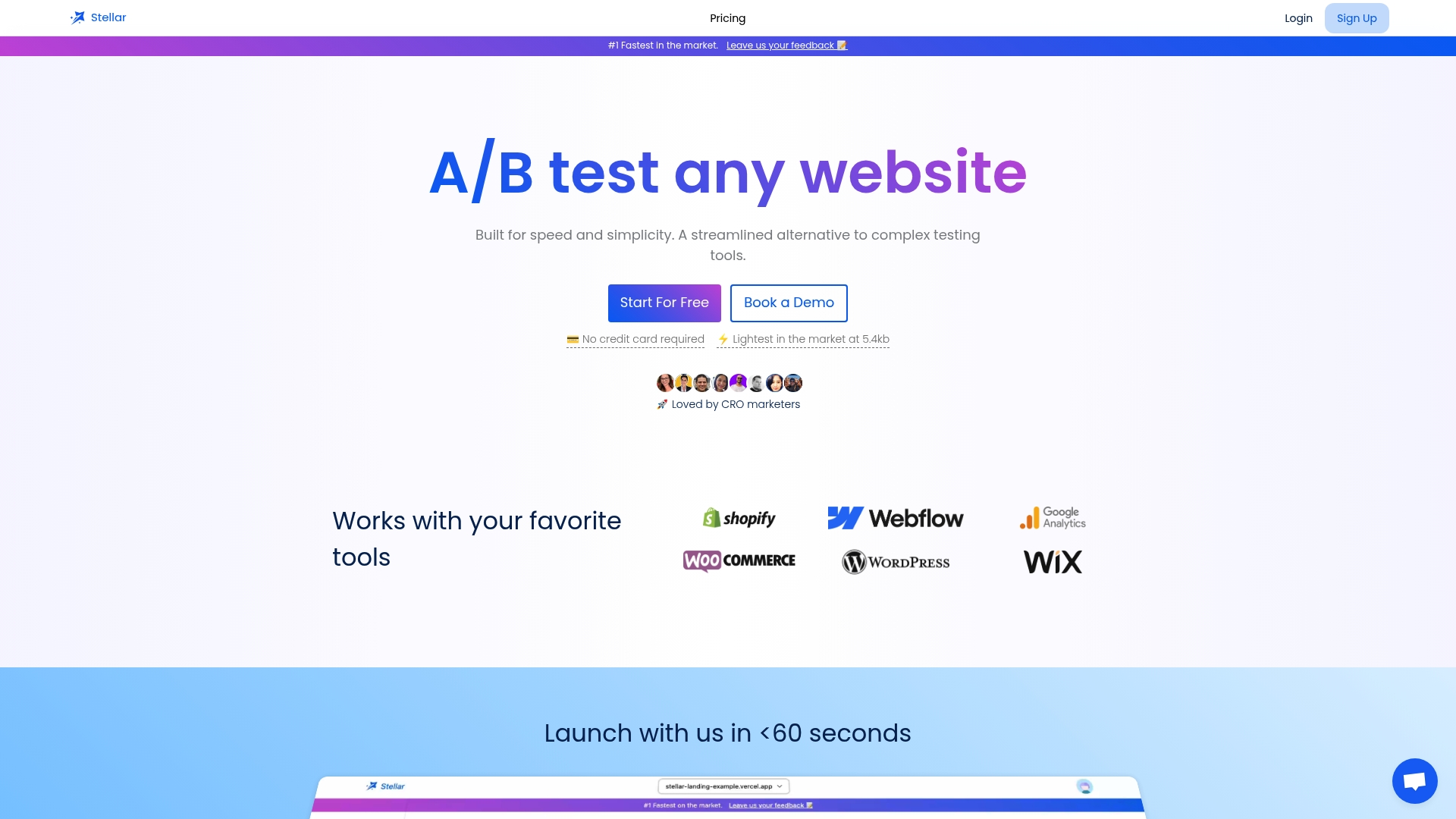
Ready to dispel personalization myths in your marketing approach? Start now with Stellar’s platform to build streamlined, high-performance campaigns that respect your users and boost conversions. Explore how simple, strategic personalization backed by robust A/B testing can transform your results today.
Frequently Asked Questions
What are common myths about personalization in marketing?
Despite popular beliefs, many myths exist, such as thinking personalization requires complex algorithms or that only big data can drive effective personalization. Start by identifying and focusing on user preferences, using straightforward strategies that deliver meaningful results.
How can I begin implementing personalization on my website?
You can kick off personalization by segmenting your audience based on characteristics like location or browsing behavior. Start with one or two simple tactics, measure their performance, and adjust based on engagement metrics within a month.
Does personalization negatively impact website performance?
No, personalization does not inherently slow down website performance. Optimize your website by selecting lightweight personalization tools and testing your strategies to maintain fast load times, ensuring a smooth user experience.
How can I ensure my personalization efforts respect user privacy?
To respect user privacy, implement clear opt-in processes and provide straightforward information about data usage. Regularly audit your personalization systems and adjust your data collection practices to align with user expectations while maintaining trust.
Can A/B testing work alongside personalization strategies?
Yes, A/B testing complements personalization by allowing you to compare different personalized approaches and assess user engagement. Start by selecting one personalization element to test, and gather data on its impact to refine your overall strategy.
Recommended
Published: 12/25/2025