
7 Key Ways to Use Heatmaps and Behavior Analytics Effectively
Getting accurate insights into how users actually interact with your website can feel overwhelming. Traditional reports and basic analytics often miss the moments where visitors get confused, lose interest, or decide to click away. If you want clear answers about what really works and what holds your audience back, you need tools and tactics that reveal real user behavior.
This list digs into visual data analysis methods like heatmaps and click tracking, giving you a practical approach to spot hidden patterns, understand engagement, and discover where improvements will make the biggest impact. You’ll uncover actionable steps to analyze clicks, scrolls, and navigation so you can make smarter decisions and drive better results. Get ready to explore proven strategies that offer true clarity about your users’ actions.
Table of Contents
- Understand Heatmaps: Visualizing User Interaction
- Track Click Patterns for Better Conversion Paths
- Analyze Scroll Maps to Optimize Key Content Placement
- Leverage Session Replays for Deeper Insights
- Identify Drop-off Points with Behavior Analytics
- Segment User Behavior for Targeted Testing
- Integrate Heatmaps with A/B Testing for Proven Results
Quick Overview
| Key Message | Explanation |
|---|---|
| 1. Use Heatmaps for Visual Insights | Analyze user clicks, scrolls, and movements to optimize site design. |
| 2. Track Click Patterns | Identify engagement hotspots and barriers to improve user navigation. |
| 3. Analyze Scroll Maps | Determine effective content placement by understanding user engagement levels. |
| 4. Leverage Session Replays | Observe real user interactions to identify friction points and usability issues. |
| 5. Segment User Behavior | Tailor testing and optimizations based on behavior across different user groups. |
1. Understand Heatmaps: Visualizing User Interaction
Heatmaps are powerful visual tools that transform complex user interaction data into intuitive, color-coded graphics. These visualizations help growth marketers and digital experience specialists understand exactly how users engage with websites, revealing hidden patterns of clicks, scrolls, and mouse movements.
At their core, heatmaps graphically represent user activity using color intensity to show where users spend the most time and interact most frequently. Website interaction patterns demonstrate that brighter colors indicate higher levels of user engagement, while cooler colors represent less interaction.
Three primary types of heatmaps provide comprehensive insights into user behavior:
Click Heatmaps: Show precisely where users click most frequently on a webpage, helping identify which elements attract the most attention.
Scroll Heatmaps: Reveal how far users scroll down a page, highlighting potential drop-off points and content engagement levels.
Move Heatmaps: Track mouse movement patterns, offering insights into how users navigate and explore web interfaces.
By analyzing these visual representations, marketers can make data-driven design decisions that optimize user experience and improve conversion rates. Understanding where users click, how they scroll, and how they move their mouse provides actionable intelligence for website improvement.
Pro tip: Start by collecting heatmap data across multiple pages and compare patterns to identify consistent user behavior trends.
2. Track Click Patterns for Better Conversion Paths
Click analytics offer a powerful window into user behavior, revealing exactly how visitors interact with your website and navigate toward conversion. By understanding click data and navigation flow, growth marketers can systematically improve user experiences and optimize conversion paths.
Click tracking goes beyond simple counting. It provides a detailed map of user intentions, showing which elements attract attention, which trigger actions, and where potential roadblocks exist in the user journey. Clickstream analysis helps identify:
Engagement Hotspots: Elements that consistently receive user clicks Navigation Patterns: The sequence of pages users visit Conversion Barriers: Points where users hesitate or abandon the process
To effectively track click patterns, focus on key metrics like click-through rates, bounce rates, and time spent on specific page elements. These insights reveal user preferences and help prioritize design improvements that guide visitors toward desired actions.
Marketing teams can use click data to:
Optimize Call to Action (CTA) Placement: Identify the most effective locations for buttons and links Streamline User Journeys: Remove unnecessary steps that might discourage conversions Personalize User Experience: Understand individual user preferences and behavior
Pro tip: Implement click tracking across multiple device types to ensure a comprehensive understanding of user interactions and preferences.
3. Analyze Scroll Maps to Optimize Key Content Placement
Scroll maps represent a critical tool for understanding user engagement by revealing exactly how visitors interact with your website content. Scroll mapping techniques help marketers and designers visualize user behavior and identify precisely where audience attention begins to wane.
These visual analytics provide a color coded representation of user scrolling patterns, with warmer colors indicating higher engagement and cooler colors signaling decreased user interest. By analyzing these maps, you can make strategic decisions about content placement and design.
Key Insights from Scroll Maps Include:
Engagement Zones: Identifying which sections of your page receive the most attention Drop Off Points: Understanding where users typically stop reading or lose interest Content Hierarchy: Determining the most effective placement for critical information
To effectively use scroll maps, consider these strategic approaches:
Prioritize Above the Fold Content: Place most important messages and calls to action in the top 25% of your page Create Scannable Layouts: Use clear headings, bullet points, and visual breaks to maintain user interest Test and Iterate: Continuously analyze scroll map data to refine your content strategy
Practical Implementation Steps:
- Identify your lowest performing content sections
- Redesign layout to improve user flow
- Reposition critical information based on scroll map insights
Pro tip: Compare scroll maps across different device types to ensure consistent user engagement on mobile and desktop platforms.
4. Leverage Session Replays for Deeper Insights
Session replays offer an unprecedented window into user behavior by recording and recreating actual user interactions with your website. These powerful analytics tools transform abstract data into visual storytelling that reveals exactly how visitors navigate and experience your digital platform.
What Session Replays Capture:
Detailed User Movements: Every mouse click, scroll, and interaction Real Time User Experience: Actual navigation patterns and potential frustration points Contextual Interactions: How users engage with specific page elements
By watching full session recordings, growth marketers can uncover critical insights that traditional analytics might miss:
Identify Usability Issues: Spot where users struggle or get confused Understand User Intent: See the actual path users take through your website Discover Hidden Friction Points: Recognize unexpected barriers in user journeys
Key Implementation Strategies:
- Select sessions from diverse user segments
- Look for patterns of hesitation or abandonment
- Compare sessions across different device types
- Use insights to redesign user experience
Important Considerations: Privacy Protection: Always ensure user anonymity and comply with data protection regulations Selective Analysis: Focus on statistically significant sample sizes Continuous Learning: Treat session replays as ongoing research
Pro tip: Combine session replay insights with other analytics tools to create a comprehensive understanding of user behavior.
5. Identify Drop-off Points with Behavior Analytics
Behavior analytics provide a critical roadmap for understanding where and why users abandon their journey through your website. Funnel analysis tracks user drop-offs systematically, revealing precisely where potential customers lose interest or encounter barriers.
What Drop-off Points Reveal:
Conversion Barriers: Specific stages where users stop progressing User Friction: Moments of hesitation or confusion Performance Gaps: Areas requiring immediate optimization
Understanding these critical points allows marketers to:
Diagnose Conversion Issues: Pinpoint exact stages where users exit Redesign User Experience: Remove obstacles preventing smooth navigation Improve Conversion Rates: Target specific points of user resistance
Key Diagnostic Strategies:
- Map entire user journey from entry to conversion
- Analyze exit pages and bounce rates
- Compare drop-off rates across different user segments
- Investigate potential technical or design barriers
Critical Metrics to Examine: Bounce Rate: Percentage of users leaving after first page Exit Rate: Percentage leaving from specific pages Conversion Funnel: Stage by stage user progression
Pro tip: Combine quantitative drop-off data with qualitative user feedback to develop comprehensive optimization strategies.
6. Segment User Behavior for Targeted Testing
User segmentation transforms generic testing approaches into precision powered strategies that deliver meaningful insights. Segmented A/B testing allows marketers to create targeted experiments that reveal nuanced user behavior across different audience groups.
Key Segmentation Categories:
Demographic Segments: Age, gender, location, income Behavioral Segments: Purchase history, engagement level, website interactions Technological Segments: Device type, browser, operating system Source Segments: Traffic origin, marketing channel
By breaking down your audience into specific groups, you can:
Personalize Experiments: Design tests tailored to unique user characteristics Increase Conversion Precision: Understand what works for specific audience subsets Reduce Testing Waste: Focus resources on most relevant user groups Uncover Hidden Insights: Identify variations in user preferences
Implementation Strategies:
- Collect comprehensive user data
- Define clear segmentation criteria
- Create distinct user personas
- Design targeted experimental variations
- Analyze segment specific results
Practical Segmentation Techniques: Micro Segmentation: Break audiences into highly specific groups Predictive Segmentation: Use machine learning to anticipate user behavior Dynamic Segmentation: Continuously update user categories based on new data
Pro tip: Start with 3 to 5 core segments and gradually refine your approach as you gather more sophisticated behavioral data.
7. Integrate Heatmaps with A/B Testing for Proven Results
Heatmaps and A/B testing form a powerful optimization ecosystem that transforms guesswork into strategic insights. Combining these analytics tools enables growth marketers to diagnose problems and validate solutions with unprecedented precision.
Strategic Integration Process:
Use Heatmaps to Diagnose: Identify user interaction patterns and potential friction points Design A/B Test Variations: Create targeted experiments based on heatmap insights Validate Hypotheses: Measure which changes improve user experience and conversion rates
Practical Implementation Strategies:
Click Heatmap Analysis:
- Identify least and most clicked page elements
- Create A/B test variations targeting low performing areas
- Validate design changes through controlled experiments
Scroll Heatmap Optimization:
- Recognize user engagement drop off points
- Redesign content layout
- Test new arrangements to improve user retention
Key Benefits of Integrated Analytics: Visual Insights: Transform complex user behavior into actionable data Precise Targeting: Focus improvements on specific user experience challenges Continuous Improvement: Create a systematic optimization cycle
Pro tip: Start small by testing one hypothesis at a time and document every insight to build a comprehensive understanding of your user behavior.
This table concisely synthesizes critical concepts and actionable insights discussed in the article regarding user behavior analysis tools and strategies within digital interfaces.
| Topic | Description | Insights and Applications |
|---|---|---|
| Heatmaps | Visual tools that display user interaction data with color-coded intensity | Analyze clicks, scrolls, and mouse movements for UX improvements |
| Click Tracking | Detailed mapping of user click interactions | Identify hot spots, optimize CTAs, and enhance conversion pathways |
| Scroll Maps | Visual representation of user engagement with page scrolling | Adjust content placement and design for maximized attention |
| Session Replays | Record and playback user sessions to observe navigation patterns | Reveal usability challenges and unexpected user behaviors |
| Drop-off Analysis | Examine points where users leave the website | Uncover friction areas and optimize the conversion funnel |
| User Segmentation | Categorize users based on demographics, behaviors, and technology used | Personalize experiences and refine testing strategies |
| Heatmaps and A/B Testing | Combine visual behavior insights with targeted testing | Achieve continuous website improvement through iterative processes |
Unlock the Full Potential of Heatmaps and Behavior Analytics with Stellar
The article highlights key challenges marketers face when using heatmaps and behavior analytics such as identifying user friction points, tracking click and scroll patterns, and optimizing conversion paths. If you want to turn these insights into concrete action without technical headaches, Stellar offers a lightweight, no-code platform tailored for marketers and growth hackers. With Stellar's intuitive visual editor and real-time analytics, you can easily integrate heatmap data into your A/B testing for targeted experiments that drive higher conversions.
Why struggle with complex tools when you can make smart decisions fast? Stellar’s advanced goal tracking helps diagnose drop-off points and segments user behavior precisely so you focus your efforts where they matter most. Combine this with Stellar's dynamic keyword insertion for personalized experiences and watch your growth accelerate.
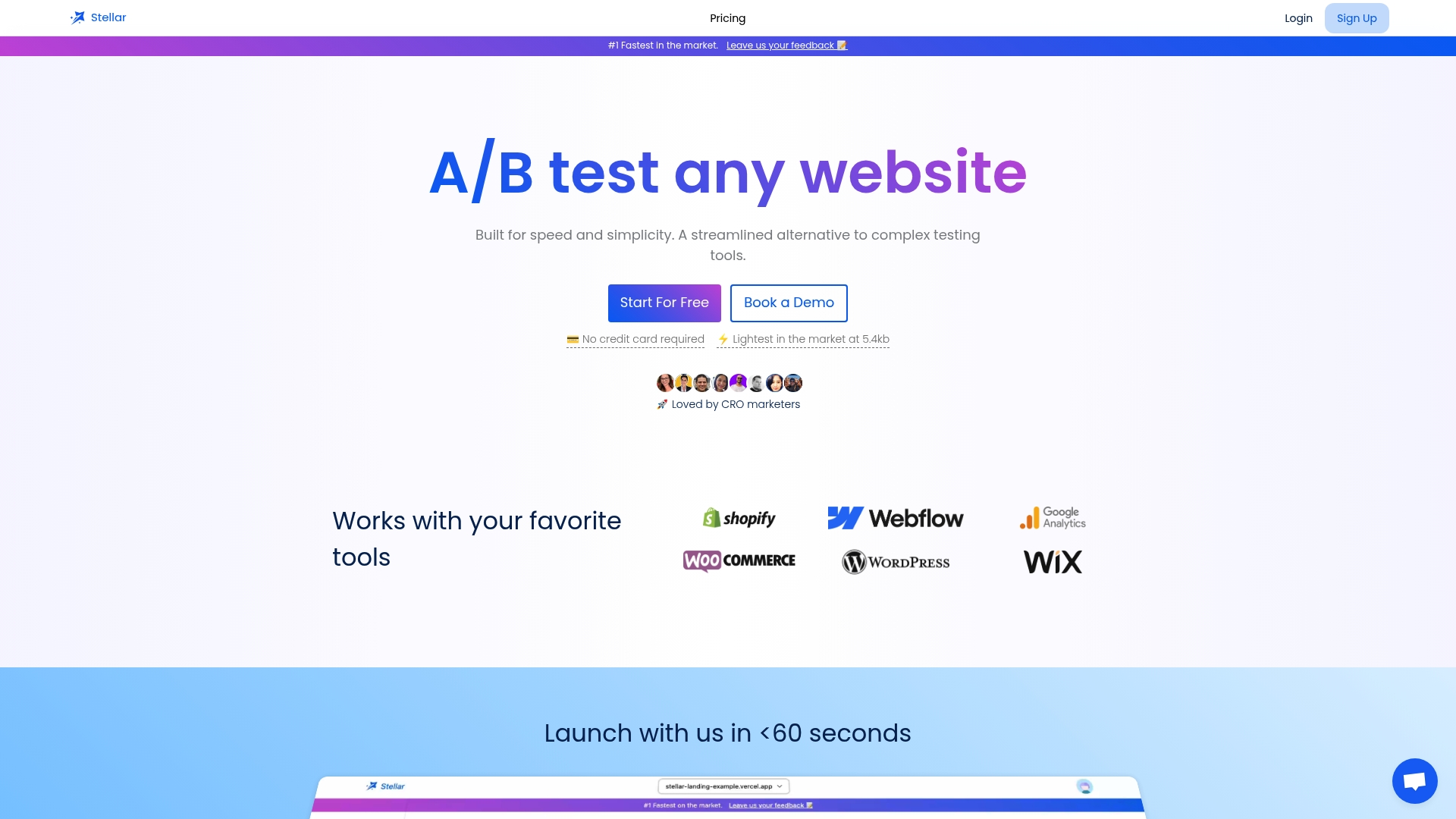
Supercharge your marketing strategy today by exploring the A/B Testing Tool and experience the fastest experimentation platform on the market. Visit Stellar's homepage to start your free trial and see how easy it is to transform heatmap and behavior analytics into real growth. Your conversion optimization journey starts now.
Frequently Asked Questions
How can I start using heatmaps to analyze user behavior effectively?
Begin by implementing heatmap tools across key pages of your website to collect data on user interactions. Analyze the color-coded patterns to identify areas of high engagement and adjust your content and layout accordingly.
What are the best practices for analyzing click patterns with behavior analytics?
Focus on tracking click-through rates and navigation flows to pinpoint engagement hotspots and conversion barriers. Use this information to optimize your call-to-action buttons and streamline user journeys.
How can scroll maps improve my website's content placement?
Scroll maps help you see where users lose interest by indicating drop-off points on your pages. Adjust your content layout based on these insights, ensuring that essential information is placed above the fold and in engaging formats.
What steps should I take to leverage session replays for understanding user intent?
Watch session replays to observe real user interactions on your website, looking for patterns in hesitation or confusion. Identify usability issues and refine your website design based on these observations to enhance overall user experience.
How can I effectively identify and analyze user drop-off points?
Monitor the user journey from entry to conversion, focusing on exit pages and bounce rates to discover where users abandon their processes. Use this data to redesign interfaces and remove barriers that inhibit conversions, aiming to reduce drop-off rates by at least 10% within a few weeks.
What are the benefits of integrating heatmaps with A/B testing?
Combining heatmaps with A/B testing enables you to validate design changes with real user data. Start by diagnosing user interaction patterns through heatmaps, then create targeted experiments to measure which modifications lead to improved user engagement and conversion rates.
Recommended
Published: 1/21/2026