
Converting Traffic Into Leads: Data-Driven SaaS Results
More than 68 percent of American SaaS companies struggle to turn website traffic into qualified leads. For digital marketers and growth hackers, every missed opportunity means a slower path to growth and wasted ad spend. Understanding how to convert passive visitors into interested prospects separates high-performing teams from the rest. This guide reveals practical strategies and proven A/B testing methods that can help transform your website traffic into consistent lead generation.
Table of Contents
- What Is Converting Traffic Into Leads
- Lead Types And Qualification Stages
- Personalization And Dynamic Content Strategies
- Leveraging A/B Testing For Higher Conversions
- Common Mistakes And Optimization Pitfalls
Key Takeaways
| Point | Details |
|---|---|
| Conversion Process | Converting traffic into leads requires understanding visitor behavior and creating engaging user experiences. Effective strategies transform anonymous visitors into interested prospects by employing targeted engagement methods. |
| Lead Qualification | Categorizing leads by engagement level helps prioritize prospects. Implementing lead qualification frameworks such as MQL, SAL, and SQL enhances the efficiency of sales efforts. |
| Personalization Strategy | Advanced personalization techniques enhance user interactions by providing tailored content experiences. This increases engagement and likelihood of conversion through relevant recommendations. |
| A/B Testing | A/B testing is essential for optimizing website conversion rates. Conducting systematic experiments helps identify effective strategies and continuously improve user experience. |
What Is Converting Traffic Into Leads
Converting traffic into leads represents a strategic process of transforming website visitors into potential customers by guiding them through a structured conversion pathway. At its core, this methodology involves understanding visitor behaviors, creating compelling user experiences, and implementing targeted strategies that encourage meaningful engagement. Effective conversion strategies require marketers to develop a systematic approach that transforms anonymous web traffic into identifiable, interested prospects.
The conversion process typically begins with attracting high-quality traffic through targeted marketing channels and continues by presenting visitors with compelling value propositions that motivate them to share contact information. This involves creating intuitive website designs, developing personalized content experiences, and establishing clear pathways for visitor interaction. Key elements include strategic placement of lead capture forms, engaging call-to-action buttons, and demonstrating immediate value through resources like ebooks, webinars, or interactive tools that address specific audience pain points.
Successful lead conversion relies on understanding the nuanced journey visitors take from initial website arrival to becoming a potential customer. Marketers must analyze user behaviors, optimize landing page designs, and create content that speaks directly to visitor motivations. This means developing targeted messaging that resonates with specific audience segments, providing transparent communication about product benefits, and building trust through social proof like customer testimonials and case studies. By implementing data-driven approaches and continuously refining conversion strategies, businesses can transform website traffic from passive browsing into active lead generation.
Pro tip: Track and analyze your website's conversion metrics regularly, focusing on understanding which content and design elements drive the most meaningful visitor interactions.
Lead Types and Qualification Stages
Lead types and qualification stages represent a systematic approach to categorizing potential customers based on their engagement level and purchase readiness. Lead qualification frameworks help businesses efficiently prioritize and nurture prospects through a structured progression from initial contact to sales conversion. These frameworks typically involve multiple stages that assess a lead's potential value and likelihood of making a purchase.
The most common lead types include cold leads (minimal engagement), warm leads (showing some interest), and hot leads (actively seeking solutions). Within these categories, businesses utilize specific qualification stages such as Marketing Qualified Leads (MQLs), Sales Accepted Leads (SALs), and Sales Qualified Leads (SQLs). MQLs are leads that marketing teams have determined meet initial criteria for potential conversion, while SALs represent leads reviewed and accepted by sales teams as worthy of direct engagement. Sales Qualified Leads represent the most promising prospects who are actively considering a purchase and have met comprehensive evaluation criteria.
Here is a quick reference for common lead types and their qualification criteria:
| Lead Type | Engagement Level | Qualification Stage | Typical Next Step |
|---|---|---|---|
| Cold Lead | Minimal interaction | Unqualified | Nurture with awareness content |
| Warm Lead | Shows some interest | Marketing Qualified Lead | Move to further engagement |
| Hot Lead | Actively engaged | Sales Qualified Lead | Direct sales outreach |
Businesses often employ structured qualification methodologies like the BANT framework (Budget, Authority, Need, Timeline) to systematically evaluate lead potential. This approach enables teams to score and prioritize leads based on specific attributes, ensuring that sales resources are directed toward the most promising opportunities. By implementing rigorous qualification processes, organizations can significantly improve conversion rates, reduce wasted effort, and create more efficient sales pipelines that focus on high-potential prospects.
Pro tip: Develop a clear, consistent lead scoring system that assigns specific point values to different engagement indicators and behavioral signals.
Personalization and Dynamic Content Strategies
Personalization and dynamic content strategies represent advanced approaches for transforming generic website experiences into tailored, individualized interactions that dramatically improve conversion rates. AI-driven dynamic personalization enables marketers to create highly responsive content that adapts in real-time to user behaviors, preferences, and engagement patterns. By moving beyond traditional demographic segmentation, these strategies leverage machine learning and predictive analytics to deliver precisely targeted experiences that resonate with individual users.
The core of effective personalization involves collecting and analyzing behavioral data to create dynamic content experiences. This approach goes beyond simple name customization, instead focusing on delivering contextually relevant information, product recommendations, and user interfaces that adjust based on individual interaction patterns. For instance, a returning visitor might see different content than a first-time user, with recommendations tailored to their previous browsing history, geographic location, or demonstrated interests. Advanced personalization techniques can modify everything from website layouts to specific messaging, ensuring that each user receives a uniquely crafted experience that increases engagement and likelihood of conversion.

Implementing sophisticated personalization requires a strategic approach that balances technological capability with user privacy and experience design. Modern SaaS platforms utilize complex algorithms that can segment users based on multiple dimensions, including browsing behavior, purchase history, interaction frequency, and predictive intent signals. By creating intelligent content mapping systems, businesses can develop personalization strategies that feel natural and helpful rather than intrusive. The most successful implementations focus on providing genuine value, using data-driven insights to anticipate user needs and present solutions before users explicitly request them.
This table summarizes essential elements for effective website personalization strategies:
| Personalization Element | Example Application | Impact on Conversion |
|---|---|---|
| Behavioral Data Tracking | Recommending content by past visits | Increases relevance and retention |
| Dynamic Content Delivery | Customized homepage for segments | Boosts engagement rates |
| AI-Driven Recommendations | Product suggestions by behavior | Improves average order value |
Pro tip: Implement a progressive personalization strategy that gradually collects user data through meaningful interactions, prioritizing transparency and user consent.
Leveraging A/B Testing for Higher Conversions
A/B testing serves as a powerful methodology for systematically improving website conversion rates by comparing two different versions of a webpage or marketing element to determine which performs more effectively. Top A/B testing examples demonstrate how strategic experimentation can unlock significant performance improvements across digital marketing channels. By creating controlled experiments that test specific variables, marketers can make data-driven decisions that incrementally enhance user experience and conversion potential.
The most successful A/B testing strategies involve methodical approaches that isolate and evaluate individual elements with precision. This might include testing different headline variations, call-to-action button colors, page layouts, image selections, or pricing presentation formats. Effective testing requires establishing clear hypotheses, defining measurable metrics, and maintaining statistical significance throughout the experiment. Marketers should focus on testing one variable at a time to ensure clarity about which specific change drives improved performance, avoiding the pitfall of multivariate testing that can muddy experimental results.
Implementing a robust A/B testing framework demands technical infrastructure and strategic planning. Modern SaaS platforms provide sophisticated tools that enable rapid experiment design, real-time result tracking, and automated statistical analysis. These platforms help businesses quickly identify winning variations, understand user behavior patterns, and continuously optimize digital experiences. Successful conversion optimization requires a continuous improvement mindset, where each test provides insights that inform subsequent experiments, creating an iterative process of incremental performance enhancement that compounds over time.
Pro tip: Develop a systematic A/B testing calendar that schedules regular experiments, ensuring consistent performance optimization across your digital channels.
Common Mistakes and Optimization Pitfalls
SaaS businesses frequently encounter critical optimization challenges that can dramatically undermine conversion efforts and user engagement. Common SaaS content optimization mistakes reveal systemic issues that prevent effective lead generation and growth. These pitfalls often stem from fundamental misunderstandings about audience needs, content strategy, and user experience design, creating barriers that prevent potential customers from taking desired actions.
Key optimization mistakes include creating unclear value propositions, overcomplicating product features, and neglecting user experience design principles. Many companies inadvertently focus exclusively on product specifications rather than demonstrating tangible customer benefits. This approach fails to connect emotionally with potential users, resulting in lower engagement and conversion rates. Successful SaaS platforms understand that effective communication involves translating technical capabilities into clear, compelling narratives that address specific user pain points and desired outcomes.
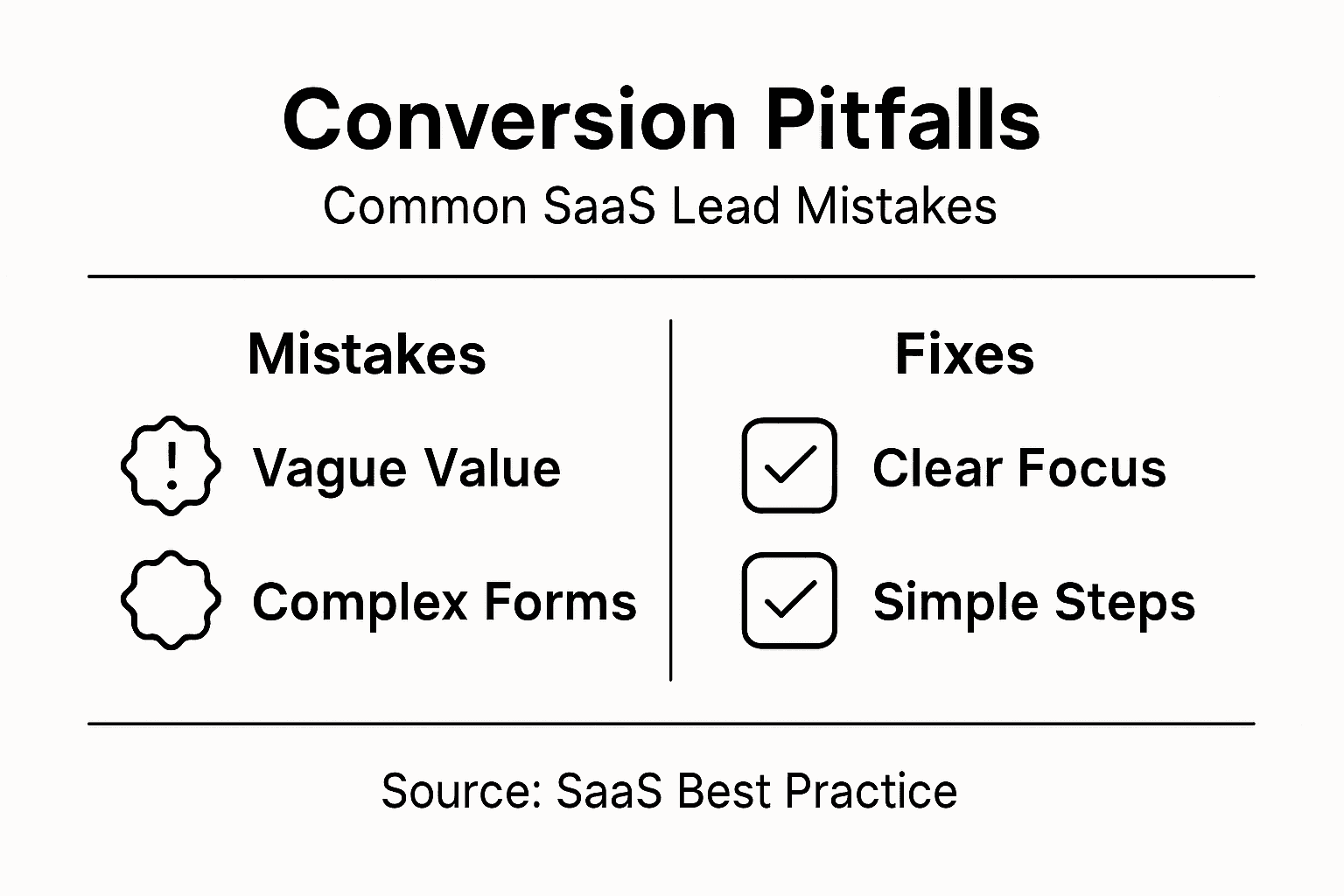
Addressing optimization challenges requires a comprehensive approach that combines strategic content development, user-centric design, and continuous performance analysis. Businesses must develop detailed audience personas, implement rigorous SEO practices, and create transparent, benefit-driven messaging that resonates with target demographics. Mobile responsiveness, intuitive navigation, and simplified pricing structures are critical elements that can significantly improve conversion potential. By systematically identifying and addressing these common pitfalls, SaaS companies can create more engaging digital experiences that effectively transform website visitors into qualified leads.
Pro tip: Conduct quarterly comprehensive audits of your digital platforms, meticulously evaluating user experience, content clarity, and conversion pathway effectiveness.
Transform Traffic Into High-Quality Leads with Data-Driven Testing
Converting website visitors into valuable leads demands precise, data-driven strategies combined with tools that simplify experimentation. This article highlights common challenges like understanding visitor behavior, optimizing landing pages, and implementing targeted personalization. If you want to overcome these pain points and boost your conversion rates effectively, adopting an agile A/B testing platform is essential.
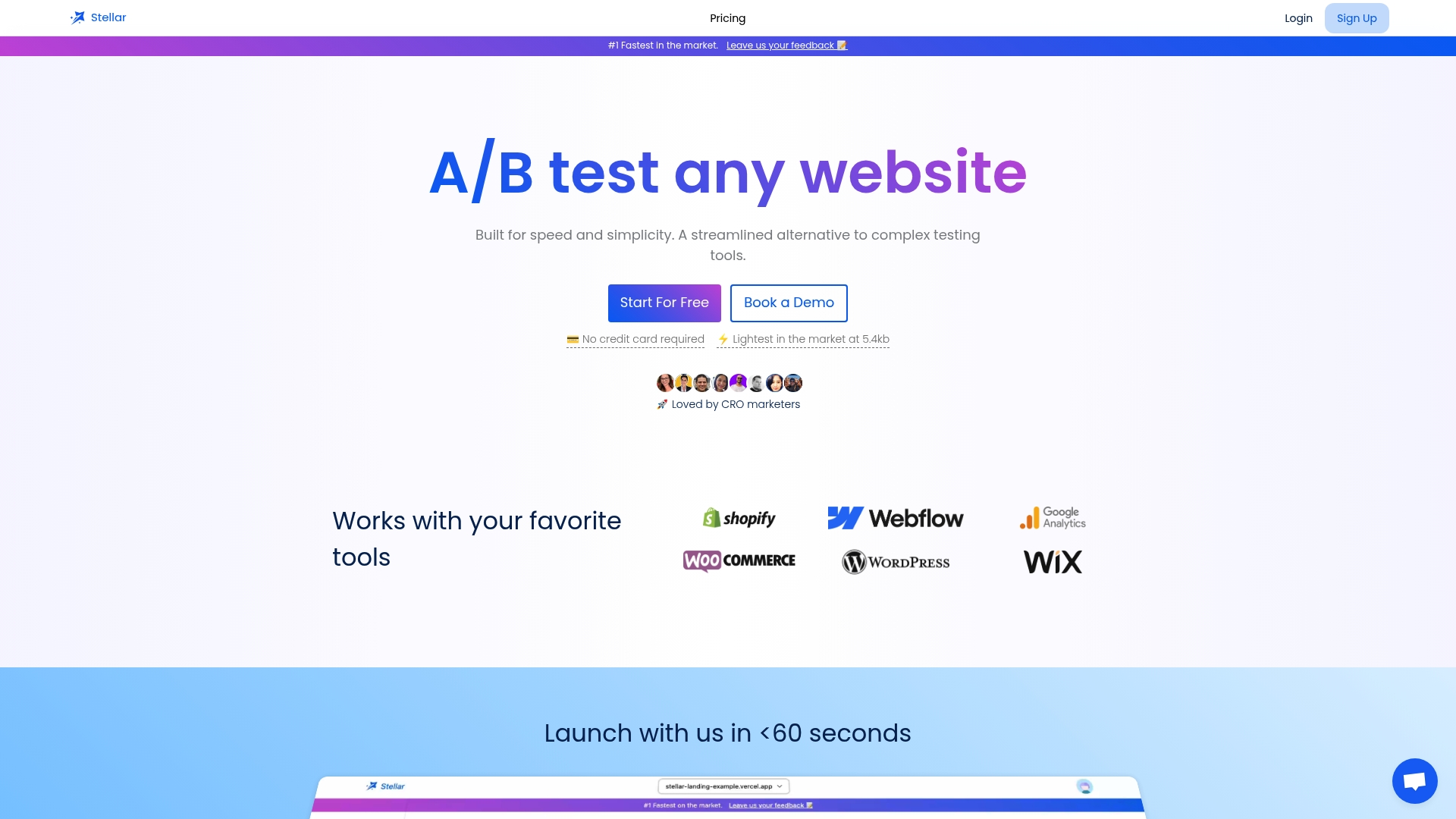
Experience the power of Stellar, a lightweight SaaS solution built specifically for marketers and growth hackers who need fast, no-code A/B testing with real-time analytics. Its intuitive Visual Editor and Dynamic Keyword Insertion let you create personalized landing pages tailored to your audience’s behavior. Start leveraging advanced goal tracking to see exactly which changes impact your lead generation most. Take control of your conversion optimization today and turn passive traffic into engaged leads now at Stellar.
Frequently Asked Questions
What is converting traffic into leads?
Converting traffic into leads is the process of transforming website visitors into potential customers by guiding them through a structured conversion pathway, employing targeted strategies to encourage meaningful engagement.
What are the different types of leads in the conversion process?
The common lead types are cold leads (minimal engagement), warm leads (some interest shown), and hot leads (actively seeking solutions). They are often qualified as Marketing Qualified Leads (MQLs), Sales Accepted Leads (SALs), and Sales Qualified Leads (SQLs).
How does personalization influence lead conversion rates?
Personalization enhances lead conversion rates by tailoring content and user experiences to individual visitors, improving relevance and engagement. Dynamic content strategies that adapt to user behavior are particularly effective.
Why is A/B testing important for optimizing conversions?
A/B testing is crucial for optimizing conversions as it allows marketers to compare different versions of webpages or marketing elements to determine which performs better, leading to data-driven decisions for improving user experience and conversion rates.
Recommended
Published: 1/13/2026