
Data-Driven Marketing Decisions: Driving Real Results
Most American businesses miss out on critical opportunities when they rely on instinct instead of data. With digital channels capturing more customer information than ever, marketers who ignore the numbers risk falling behind. By embracing a data-driven approach, companies can tap into insights that drive smarter decisions, boosting marketing effectiveness by as much as 30 percent. This guide shows how turning data into strategy helps American brands understand their audiences and improve every campaign.
Table of Contents
- Defining Data-Driven Marketing Decisions
- Types of Data and How They Inform Strategy
- Key Tools: A/B Testing and Real-Time Analytics
- Applying Data Insights to Campaign Optimization
- Common Pitfalls and How to Avoid Them
Key Takeaways
| Point | Details |
|---|---|
| Data-Driven Marketing | It enables businesses to make informed decisions by leveraging data analysis to understand customer behavior and preferences. |
| Types of Marketing Data | Utilizing various data categories like demographic, behavioral, and transactional data provides a holistic view for crafting targeted strategies. |
| A/B Testing and Real-Time Analytics | These tools allow marketers to conduct controlled experiments and gather immediate insights, optimizing campaigns effectively. |
| Avoiding Common Pitfalls | Marketers should focus on comprehensive data validation and contextual analysis to prevent misinterpretation and ensure data-driven success. |
Defining Data-Driven Marketing Decisions
Data-driven marketing decisions represent a strategic approach that transforms raw information into actionable insights, enabling businesses to make smarter, more precise choices about their marketing efforts. These decisions rely on empirical evidence and quantitative analysis rather than gut feelings or traditional assumptions. Marketing strategies powered by data analysis provide a systematic method for understanding customer behaviors, preferences, and potential future actions.
At its core, data-driven marketing involves collecting, analyzing, and interpreting complex customer information from multiple sources. This might include website analytics, social media interactions, purchase histories, demographic data, and behavioral patterns. By aggregating these diverse datasets, marketers can develop nuanced, personalized strategies that speak directly to specific audience segments. The goal is transforming abstract numbers into meaningful narratives that guide strategic decision-making.
The fundamental components of effective data-driven marketing decisions typically include:
- Comprehensive Data Collection: Gathering information from diverse channels
- Advanced Analytics: Using sophisticated tools to interpret complex datasets
- Customer Segmentation: Breaking down audiences into precise, actionable groups
- Predictive Modeling: Anticipating future customer behaviors and trends
- Continuous Optimization: Regularly refining strategies based on emerging insights
By embracing a systematic approach to data analysis, businesses can move beyond traditional marketing limitations. They can create hyper-targeted campaigns, optimize resource allocation, and dramatically improve return on investment by understanding precisely what resonates with their target audience.
Types of Data and How They Inform Strategy
Data types are the foundational building blocks of strategic marketing insights, each offering unique perspectives on customer behavior and potential engagement opportunities. Marketing strategies leverage multiple data categories to create comprehensive, nuanced approaches that go beyond traditional one-size-fits-all campaigns. Understanding these different data types is crucial for developing targeted, personalized marketing initiatives that resonate with specific audience segments.

The primary categories of marketing data include demographic data, which provides basic information about customer characteristics like age, gender, income, and location; behavioral data, tracking how customers interact with digital platforms, websites, and products; and transactional data, capturing purchase histories, spending patterns, and customer lifetime value. These data types work synergistically to paint a holistic picture of customer preferences, enabling marketers to craft highly specialized communication strategies.
Effective data utilization involves several strategic approaches:
- Demographic Insights: Understanding customer background and basic characteristics
- Behavioral Tracking: Analyzing digital interactions and engagement patterns
- Transactional Analysis: Examining purchase behaviors and economic interactions
- Psychographic Profiling: Exploring customer attitudes, interests, and lifestyle choices
- Predictive Modeling: Using historical data to anticipate future customer actions
Big data techniques in marketing have revolutionized how businesses understand and engage with their target audiences. By integrating these diverse data sources, companies can develop sophisticated, responsive marketing strategies that adapt in real time to changing customer needs and preferences. The result is a more dynamic, personalized approach that significantly enhances customer experience and drives meaningful business growth.

Key Tools: A/B Testing and Real-Time Analytics
A/B testing and real-time analytics represent two powerful tools that transform data-driven marketing from theoretical concept to practical strategy. Systematic comparison techniques enable marketers to make precise, informed decisions by directly measuring the performance of different marketing approaches. These methodologies provide unprecedented insights into customer behavior, allowing businesses to optimize their marketing efforts with scientific precision.
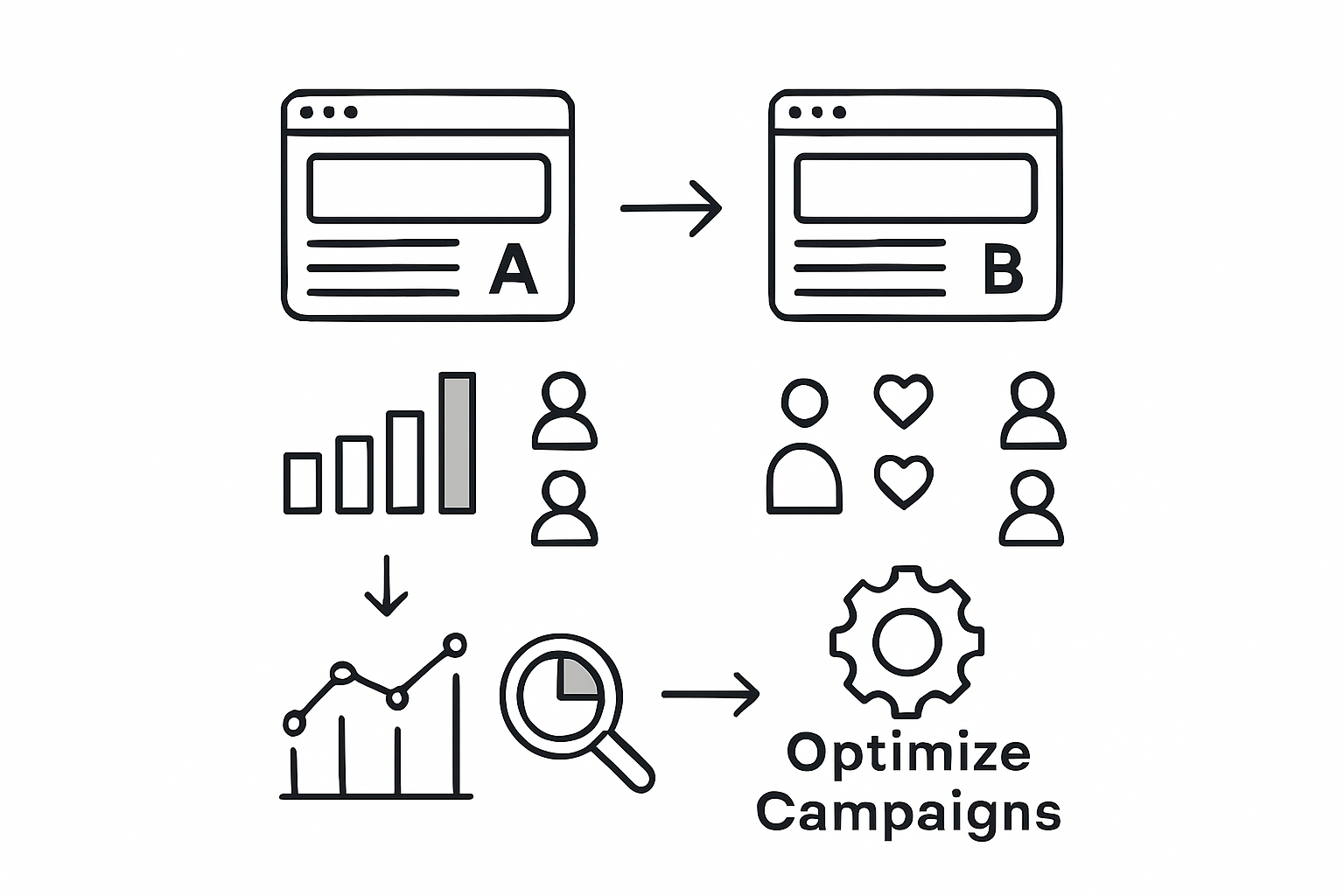
A/B testing involves creating two distinct versions of a marketing element - such as a webpage, email, or advertisement - and comparing their performance to determine which version produces superior results. Marketers can test variables like headline text, visual design, call-to-action placement, or overall layout. Real-time analytics complement this process by providing immediate feedback on these experiments, tracking metrics like click-through rates, conversion rates, and user engagement instantaneously.
Key strategies for effective A/B testing and real-time analytics include:
- Hypothesis Formation: Clearly defining expected outcomes before testing
- Controlled Experimentation: Changing only one variable at a time
- Statistical Significance: Ensuring results are mathematically meaningful
- Continuous Monitoring: Tracking performance in real-time
- Rapid Iteration: Quickly implementing insights from test results
Advanced A/B testing methodologies have revolutionized how businesses approach marketing optimization. By leveraging these powerful analytical tools, companies can move beyond guesswork, making data-backed decisions that directly improve customer experience and drive measurable business growth. The ability to test, measure, and quickly adapt has become a critical competitive advantage in today's fast-paced digital marketplace.
Applying Data Insights to Campaign Optimization
Campaign optimization transforms raw data into strategic marketing intelligence, enabling businesses to create hyper-targeted experiences that resonate deeply with specific audience segments. Sophisticated data analysis techniques allow marketers to move beyond generic messaging, crafting personalized communication that speaks directly to individual customer needs and preferences. This approach represents a fundamental shift from traditional broad-stroke marketing strategies to precision-driven engagement.
The process of applying data insights involves multiple critical steps. Marketers first segment audiences based on comprehensive data profiles, identifying unique characteristics, behaviors, and potential value. They then develop targeted messaging that addresses specific pain points, interests, and motivations revealed through detailed analytics. Advanced segmentation might include factors like purchase history, browsing behavior, demographic information, and engagement patterns across multiple digital platforms.
Key strategies for effective campaign optimization include:
- Granular Audience Segmentation: Breaking down audiences into precise microgroups
- Personalization at Scale: Creating customized experiences for different customer segments
- Predictive Modeling: Anticipating customer behaviors and preferences
- Channel Optimization: Identifying most effective communication platforms
- Continuous Performance Tracking: Monitoring and adjusting campaigns in real time
Data-driven marketing techniques have revolutionized how businesses approach customer engagement. By transforming complex data into actionable insights, companies can create more meaningful connections, improve customer satisfaction, and drive significant improvements in conversion rates. The ability to understand and respond to customer needs with precision has become a critical competitive advantage in today's dynamic marketing landscape.
Common Pitfalls and How to Avoid Them
Data-driven marketing demands sophisticated strategies that balance quantitative insights with nuanced human understanding. Misinterpreting data can lead to catastrophic marketing decisions, where raw numbers overshadow critical contextual considerations. Successful marketers recognize that data is a tool, not an absolute oracle, requiring careful interpretation and strategic application.
The most frequent pitfalls in data-driven marketing stem from fundamental misunderstandings about data's role and limitations. Common mistakes include over-relying on aggregate metrics, failing to validate data quality, and neglecting the human elements that numbers cannot capture. Marketers must develop a critical eye, understanding that statistical trends represent patterns, not universal truths. This requires cross-referencing multiple data sources, maintaining healthy skepticism, and continuously challenging underlying assumptions.
Key strategies for avoiding data-driven marketing mistakes include:
- Comprehensive Data Validation: Rigorously checking data accuracy and reliability
- Contextual Analysis: Understanding the broader narrative behind numerical trends
- Holistic Interpretation: Combining quantitative insights with qualitative understanding
- Continuous Learning: Regularly updating analytical skills and methodologies
- Ethical Data Usage: Maintaining transparency and respecting customer privacy
Advanced data quality techniques have transformed how businesses approach marketing intelligence. By developing a sophisticated, nuanced approach to data interpretation, companies can avoid common pitfalls and create more meaningful, responsive marketing strategies. The goal is not just collecting data, but developing the wisdom to understand what the data truly reveals about customer behavior and market dynamics.
Harness the Power of Data-Driven Marketing with Stellar
Making smart, data-driven marketing decisions requires precise tools that translate complex insights into clear, actionable strategies. The article highlights challenges such as the need for advanced A/B testing, real-time analytics, and personalized campaign optimization to overcome guesswork and deliver real results. If you want to avoid common pitfalls like misinterpreting data or slow experimentation cycles, a fast, reliable, and user-friendly platform is essential.
Stellar is designed specifically for marketers and growth hackers seeking to optimize their campaigns effortlessly. With its lightning-fast A/B testing tool, no-code visual editor, and advanced goal tracking, you gain full control over every experiment and insight. Experience real-time analytics that empower you to refine your strategy dynamically and make confident decisions based on accurate customer behaviors and preferences. Perfect for small to medium-sized businesses, Stellar keeps your website performance smooth with its lightweight script of just 5.4KB.
Ready to transform your marketing efforts with precision and speed Visit Stellar now to explore how our platform can help you create targeted, data-driven campaigns that drive meaningful growth Act today and join marketers who are turning insights into action without the complexity typical of traditional tools Discover our A/B Testing Tool and start optimizing your marketing results with Stellar’s intuitive, performance-focused solution.
Frequently Asked Questions
What is data-driven marketing?
Data-driven marketing is a strategy that relies on empirical evidence and quantitative analysis to inform marketing decisions, moving beyond gut feelings to drive smarter business choices.
How can A/B testing improve marketing strategies?
A/B testing allows marketers to compare two versions of a marketing element to determine which performs better. This approach provides actionable insights that can refine marketing efforts and enhance customer engagement.
What types of data are essential for effective marketing strategies?
Essential data types include demographic data (age, gender, income), behavioral data (customer interactions), transactional data (purchase histories), and psychographic data (attitudes and interests).
What are common pitfalls in data-driven marketing?
Common pitfalls include over-relying on aggregate metrics, failing to validate data quality, and neglecting the human context behind the numbers. Marketers should balance quantitative data with qualitative insights to create effective strategies.
Recommended
Published: 12/9/2025