
7 Steps to Master Effective Headline Testing for Marketers
Most American brands underestimate the power of a winning headline, yet a single tweak can lift traffic by over 20 percent. In the crowded digital space, grabbing attention fast is more than a wish—it is a business necessity. Whether you are aiming for higher clickthrough rates or deeper reader engagement, understanding and mastering headline testing unlocks real, measurable gains in how American audiences interact with your message.
Table of Contents
- Understand The Importance Of Headline Testing
- Set Clear Goals For Each Headline Test
- Choose The Right A/B Testing Tools
- Create Multiple Headline Variations
- Segment Audiences For Precise Results
- Analyze Test Results With Real-Time Data
- Apply Learnings To Optimize Future Campaigns
Quick Summary
| Takeaway | Explanation |
|---|---|
| 1. Headline testing boosts traffic significantly | Strategic headline changes can increase clickthrough rates by over 20%, making this a vital marketing strategy. |
| 2. Set clear, specific testing goals | Defining measurable objectives enhances the effectiveness of your headline tests and aligns them with marketing strategies. |
| 3. Use multiple variations for maximum impact | Creating 5 to 7 distinct headlines can improve audience engagement and overall content performance dramatically. |
| 4. Segment your audience for tailored strategies | Understanding different audience groups helps create headlines that resonate better, improving testing outcomes. |
| 5. Analyze results in real-time for quick adjustments | Employ real-time data analysis to make immediate changes based on headline performance, ensuring continual optimization. |
1. Understand the Importance of Headline Testing
Headline testing is not just a marketing tactic it is a critical strategy for capturing audience attention and driving engagement. By systematically analyzing and optimizing your headlines, you can significantly increase your content's visibility and clickthrough rates.
Research demonstrates that well crafted headlines can dramatically impact audience behavior. A/B testing reveals that strategic headline modifications can boost traffic by over 20%, making it a powerful tool for marketers seeking to maximize their content's performance.
Why Headline Testing Matters
Effective headline testing goes beyond simple word swapping. It involves understanding psychological triggers that compel readers to click and engage. Your headline serves as the first point of contact between your content and potential readers, acting as a critical gateway that determines whether someone will invest time in your message.
Key Benefits of Headline Testing:
- Increased Engagement: Discover which language and framing resonate most with your target audience
- Higher Clickthrough Rates: Optimize headlines to attract more potential readers
- Data Driven Insights: Gain concrete understanding of what motivates your specific audience
- Continuous Improvement: Develop a systematic approach to refining communication strategies
To implement effective headline testing, start by creating multiple headline variations that explore different emotional angles, benefit statements, and curiosity triggers. Track metrics like clickthrough rates, time on page, and overall engagement to understand which approaches work best for your specific audience.
Remember headlines are not one size fits all. What works for one audience might fall flat for another. Consistent testing and refinement are key to developing headline strategies that genuinely connect with your readers.
2. Set Clear Goals for Each Headline Test
Successful headline testing begins with defining precise, measurable objectives that align with your broader marketing strategy. Without clear goals, your testing efforts become scattered and ineffective.
Why Goal Setting Matters
Advanced experimentation frameworks demonstrate that strategic testing can dramatically improve marketing outcomes. Researchers have found that goal oriented testing approaches can lead to substantial performance improvements, with some studies showing up to a 46% increase in clickthrough rates when tests are carefully structured.
Defining Effective Testing Goals
Your headline testing goals should be specific, quantifiable, and directly tied to key performance indicators. Common objectives might include:
- Increase Clickthrough Rates: Measure the percentage of readers who click on your headline
- Improve Engagement Time: Track how long readers stay on the page after being attracted by the headline
- Boost Conversion Rates: Determine how headline variations impact final user actions
- Reduce Bounce Rates: Assess how different headlines influence initial page interaction
Strategic Goal Setting Approach
When establishing goals, consider the entire user journey. A compelling headline is not just about attracting clicks but about setting the right expectations for your content. Advanced testing frameworks like the Test & Roll method emphasize balancing the potential gains from testing against the opportunity costs, helping marketers make more informed decisions.
Practical tip: Start with one primary goal per headline test. Trying to optimize multiple metrics simultaneously can dilute your insights and make results difficult to interpret. Focus on a single, well defined objective that directly supports your broader marketing strategy.
Remember that effective goal setting is an iterative process. Each test provides valuable insights that can refine your approach for future headline optimizations.
3. Choose the Right A/B Testing Tools
Selecting the appropriate A/B testing tool can make or break your headline optimization strategy. The right tool provides not just data but actionable insights that drive meaningful improvements in your marketing performance.
When evaluating A/B testing platforms, consider tools that offer robust features aligned with your specific marketing objectives. Avoiding common testing mistakes starts with choosing a platform that matches your technical capabilities and business needs.
Key Considerations for Tool Selection
Your ideal A/B testing tool should include:
- Ease of Use: Intuitive interface that doesn't require advanced technical skills
- Integration Capabilities: Seamless connection with your existing marketing tech stack
- Statistical Significance: Built in mechanisms for validating test results
- Comprehensive Reporting: Detailed analytics that provide clear, actionable insights
- Pricing Flexibility: Scalable options that grow with your business
Understanding Tool Capabilities
Historically, platforms like web experimentation tools have revolutionized marketing strategies, enabling marketers to make data driven decisions. While some classic tools like Google Optimize have been discontinued, the market continues to evolve with sophisticated testing solutions.
Practical Selection Strategy
Start by mapping your specific testing requirements. Do you need web testing, mobile app optimization, or multichannel experimentation? Create a checklist of must have features and evaluate tools against these criteria.
Pro tip: Always request a demo or free trial before committing to any A/B testing platform. This allows you to assess the tool's actual performance and compatibility with your workflow.
Remember that the most expensive tool is not always the best. Focus on finding a solution that provides clear, reliable insights and matches your team's technical expertise and budget constraints.
4. Create Multiple Headline Variations
Crafting multiple headline variations is not just a recommendation it is a strategic imperative for maximizing audience engagement. Research demonstrates that diverse headline approaches can dramatically improve content performance.
Advanced testing methodologies reveal that creating multiple variations significantly increases your chances of capturing audience attention. Innovative research shows that alternative headlines can outperform original versions by up to 78%, making variation critical for marketing success.
Headline Variation Strategies
When developing headline variations, focus on exploring different psychological triggers:
- Emotional Approaches: Create headlines that evoke curiosity, excitement, or urgency
- Benefit Driven Versions: Highlight specific value propositions for readers
- Question Based Headlines: Spark interest by framing content as a compelling question
- Numerical Variations: Use list based or statistic driven formats
- Problem Solution Formats: Address reader pain points directly
Practical Variation Techniques
Successful headline variations require strategic thinking. Batched multi armed bandit approaches demonstrate that dynamic traffic allocation can optimize headline performance, potentially increasing clicks by over 3.69%.
Pro tip: Aim to create 5 to 7 distinct headline variations for each piece of content. Experiment with different emotional tones, structural formats, and core messaging approaches.
Remember that effective headline testing is an iterative process. What works today might not work tomorrow, so continuous experimentation is key to maintaining audience engagement.
5. Segment Audiences for Precise Results
Audience segmentation transforms headline testing from a generic approach to a precise, targeted strategy. By understanding and categorizing your audience, you can create more resonant and effective content.
Advanced marketing experimentation techniques demonstrate that precise audience segmentation can dramatically improve testing outcomes. Sophisticated testing systems now enable marketers to create highly targeted experimental conditions that reveal nuanced consumer behaviors.
Audience Segmentation Strategies
Effective audience segmentation goes beyond basic demographics. Consider breaking down your audience using:
- Behavioral Characteristics: Purchasing habits, engagement levels, content preferences
- Demographic Factors: Age, location, income, professional background
- Psychographic Attributes: Values, interests, lifestyle choices
- Technological Interactions: Device usage, platform preferences, digital savviness
- Customer Journey Stage: New prospects, active users, loyal customers
Practical Segmentation Approach
Start by analyzing your existing customer data. Look for patterns that reveal distinct audience groups with unique characteristics. Each segment may respond differently to headline variations, providing rich insights into communication strategies.
Pro tip: Create unique headline variations tailored to each audience segment. A headline that resonates with young professionals might fall flat with seasoned executives.
Remember that audience segmentation is an ongoing process. Continuously refine your understanding as consumer behaviors and market dynamics evolve. The most successful marketers treat segmentation as a dynamic, adaptive strategy.
6. Analyze Test Results with Real-Time Data
Real-time data analysis transforms headline testing from a guessing game into a precise scientific approach. By leveraging advanced analytical techniques, marketers can make immediate, informed decisions about content performance.
Real-time analytics provide critical insights that allow for rapid optimization of headline strategies. Cutting edge testing methodologies now enable marketers to dynamically allocate traffic and quickly identify winning headline variations.
Key Metrics for Real-Time Analysis
Focus on these critical performance indicators during your analysis:
- Clickthrough Rate (CTR): Measure immediate audience engagement
- Time on Page: Assess how long readers stay after clicking
- Bounce Rate: Track how quickly readers leave after arriving
- Conversion Rate: Evaluate the headline's impact on final user actions
- Audience Segment Performance: Compare results across different user groups
Dynamic Analysis Strategies
The batched Thompson Sampling method demonstrates how sophisticated algorithms can quickly converge on optimal headline performance. This approach allows for rapid traffic reallocation to the most promising variations.
Pro tip: Set up your analytics dashboard to provide instant visual feedback. Look for statistically significant differences between headline variations within the first few hours of testing.
Remember that real-time analysis is an ongoing process. Continuously monitor your results, be prepared to pivot quickly, and never assume that past performance guarantees future success.
7. Apply Learnings to Optimize Future Campaigns
Transforming headline testing insights into actionable marketing strategies requires a systematic and nuanced approach. The data you collect is only valuable when thoughtfully integrated into your broader content planning.
Digital marketing strategies demonstrate that successful optimization goes beyond simple metric tracking. Researchers have found that while A/B testing can dramatically improve performance metrics revealing up to a 28% increase in pageviews, the application of these insights requires careful interpretation.
Strategic Learning Application
Effective optimization involves:
- Pattern Recognition: Identify consistent themes in successful headlines
- Audience Insight Mapping: Connect test results to specific audience segments
- Contextual Understanding: Recognize limitations of individual test results
- Continuous Experimentation: Treat each test as part of an ongoing learning process
- Cross Campaign Synthesis: Apply insights across different content types
Key Optimization Principles
Remember that headline testing results are contextual. Research indicates that successful tactics in one scenario may not universally apply. Your goal is to develop a nuanced understanding of what resonates with your specific audience.
Pro tip: Create a centralized insights repository where you document test results, key learnings, and potential strategy adjustments. This institutional memory becomes increasingly valuable as you refine your approach.
Successful marketers view headline testing not as a one time activity but as a continuous dialogue with their audience. Each test provides another layer of understanding, helping you craft more compelling communication strategies.
This table summarizes the importance, strategies, and outcomes of headline testing as discussed in the article.
| Strategy | Implementation | Expected Outcomes |
|---|---|---|
| Importance of Headline Testing | Understanding audience psychology and the impact of well-crafted headlines. | Increased visibility and clickthrough rates by 20% or more. |
| Set Clear Goals | Define specific, measurable objectives tied to key performance indicators. | Up to a 46% increase in clickthrough rates with structured tests. |
| Choose the Right A/B Testing Tools | Select tools that offer ease of use, integration, and robust reporting features. | Actionable insights and improved marketing performance. |
| Create Multiple Headline Variations | Develop diverse headlines focusing on emotional, numerical, and benefit-driven versions. | Increased engagement and potentially a 78% better performance than original headlines. |
| Segment Audiences | Use behavioral, demographic, and psychographic data for targeted content. | Improved testing outcomes with resonant strategies for each segment. |
| Analyze Test Results | Employ real-time analytics to assess key metrics like CTR, bounce rate, and conversion rate. | Rapid optimization and ability to pivot quickly. |
| Apply Learnings | Patterns recognition and continuous experimentation for future campaigns. | More compelling communication strategies and increased engagement. |
Unlock the Power of Headline Testing with Stellar's A/B Tool
Mastering the art of headline testing means confronting challenges like crafting multiple variations, segmenting audiences precisely, and analyzing real-time data for instant insights. If you want to boost engagement, increase clickthrough rates, and continuously improve your marketing outcomes like the article highlights, you need a solution that simplifies these critical steps without overwhelming your resources.
Stellar is designed exactly for marketers and growth hackers who face these hurdles daily. With our no-code visual editor, dynamic keyword insertion, and advanced goal tracking, you can run swift, accurate headline tests tailored for your unique audience segments. Enjoy the fastest A/B testing experience powered by real-time analytics that help you make data-driven decisions with confidence and speed.
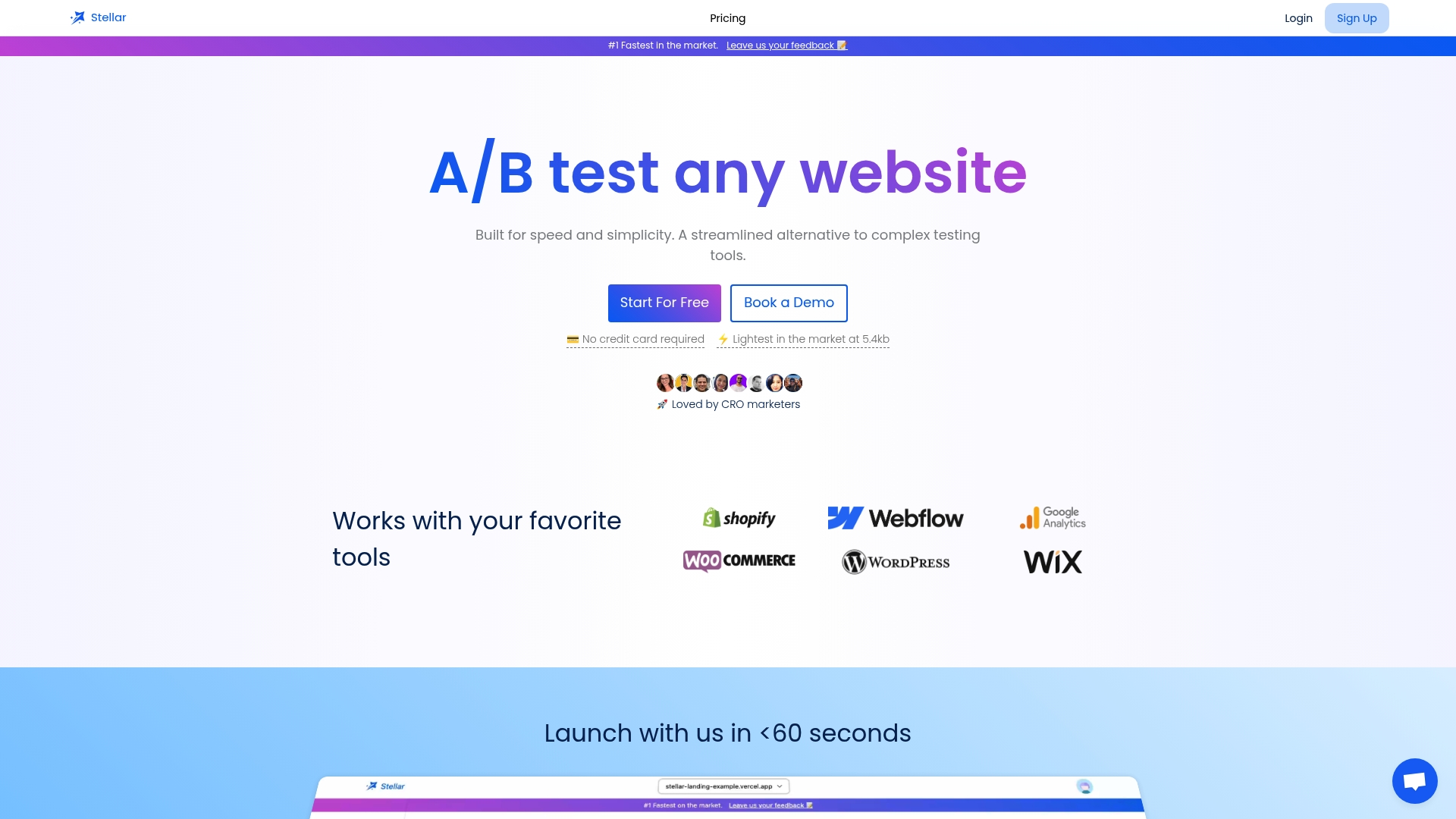
Ready to transform your headline testing strategy into a growth engine? Discover how Stellar’s lightweight, user-friendly platform makes sophisticated experimentation simple at Stellar’s homepage. Start your free plan today and experience seamless headline optimization that delivers measurable results now. Learn more about advanced goal tracking and how to avoid common testing mistakes at GoStellar’s blog. Your next winning headline is just a test away.
Frequently Asked Questions
What are the key benefits of headline testing for marketers?
Effective headline testing can lead to increased engagement, higher clickthrough rates, and data-driven insights about your audience. To get started, create different headline variations to see which resonates best within the first few weeks of your campaign.
How should I set clear goals for my headline tests?
Establishing precise, measurable objectives is crucial for successful headline testing. Focus on one primary goal per test, such as increasing clickthrough rates by 15% within a month, to streamline your efforts and gain clearer insights.
What features should I look for in A/B testing tools?
Select A/B testing tools that offer ease of use, integration capabilities, and comprehensive reporting. Evaluate your needs and choose a tool that matches your technical skills and business requirements to maximize your testing potential.
How many headline variations should I create for each test?
Aim to create 5 to 7 distinct headline variations for each piece of content. This variety increases your chances of capturing audience attention and can lead to significant performance improvements in engagement metrics.
How can I segment my audience for more effective headline testing?
To segment your audience effectively, analyze their behavioral characteristics, demographics, and psychographic attributes. Tailor your headline variations to these segments to enhance relevance and engagement, ensuring each group receives messaging that resonates with them.
What key performance indicators should I analyze after conducting headline tests?
Focus on metrics like clickthrough rate, time on page, bounce rate, and conversion rate to assess the effectiveness of your headlines. Set up your analysis dashboard to review these metrics shortly after testing begins to make timely improvements.
Recommended
Published: 12/5/2025