
Emerging Digital Marketing Trends: Complete Guide
Over eighty percent of american businesses say digital marketing has changed more in the last three years than in the previous decade. This rapid pace of change is not just impressive, it forces every marketer to rethink how they reach customers and measure results. Staying on top of these emerging trends is essential for anyone who wants to cut through the noise and create campaigns that actually deliver results in an evolving online world.
Table of Contents
- Defining Emerging Digital Marketing Trends Today
- Major Types of Digital Marketing Innovations
- AI, Automation, and Personalization Advances
- Data Privacy, Regulation, and User Trust Issues
- Measuring Campaign Success and Common Pitfalls
Key Takeaways
| Point | Details |
|---|---|
| Emerging Technologies | AI and machine learning are crucial for developing personalized marketing strategies that increase consumer engagement. |
| Data Privacy and Trust | Transparency in data usage and ethical practices are essential for maintaining user trust as digital marketing evolves. |
| Campaign Measurement | Effective digital marketing relies on accurately measuring key metrics like conversion rate and customer acquisition cost to evaluate success. |
| Continuous Innovation | Marketers must embrace technological advancements to adapt their strategies and stay competitive in a rapidly changing landscape. |
Defining Emerging Digital Marketing Trends Today
Digital marketing is experiencing unprecedented transformation, with technology and consumer behavior driving radical shifts in strategic approaches. According to research from Business Perspectives, a comprehensive bibliometric analysis examining 513 scholarly articles reveals significant evolution in digital marketing research between 2003 and 2024.
The current digital marketing landscape is characterized by several pivotal trends that are reshaping how businesses connect with audiences. Artificial Intelligence and Machine Learning are emerging as critical drivers of personalized marketing strategies, enabling unprecedented levels of customer targeting and engagement. According to IJCS Journal, key advancements include:
- Voice search optimization
- Privacy-centric marketing approaches
- Advanced video marketing techniques
- AI-driven customer interaction models
The rapid technological progression demands that marketers remain agile and adaptive. A/B Testing Digital Marketing: Strategies and Best Practices 2025 highlights the importance of continuous experimentation and data-driven decision making. Modern digital marketing is no longer about broad, generic campaigns but hyper-targeted, personalized experiences that speak directly to individual consumer needs and preferences. Successful marketers will leverage emerging technologies to create more meaningful, contextually relevant interactions that transcend traditional marketing boundaries.

Major Types of Digital Marketing Innovations
Digital marketing continues to evolve at an unprecedented pace, with cutting-edge innovations transforming how businesses engage with consumers. ArXiv Research highlights the dramatic shift from traditional advertising methods to sophisticated AI-driven strategies that enable unprecedented levels of personalization and consumer interaction.
Several key innovations are reshaping the digital marketing landscape:
- Predictive Analytics: Leveraging machine learning to anticipate consumer behavior
- Personalized Recommendation Engines: Creating hyper-targeted marketing experiences
- AI-Powered Customer Interaction: Developing intelligent chatbots and virtual assistants
- Dynamic Content Optimization: Real-time content adaptation based on user preferences
According to additional research from ArXiv, Artificial Intelligence is fundamentally transforming digital marketing by enabling more nuanced and intelligent consumer interactions. These innovations go beyond traditional marketing approaches, allowing businesses to create deeply personalized experiences that adapt in real-time to individual user needs.
 7 Proven Growth Hacking Strategies 2025 for Marketers underscores the importance of embracing these technological advancements, demonstrating how data-driven strategies can dramatically enhance marketing effectiveness and consumer engagement.
AI, Automation, and Personalization Advances
The intersection of artificial intelligence, automation, and personalization is fundamentally transforming digital marketing strategies. ArXiv Research reveals how advanced technologies are revolutionizing consumer engagement, particularly through sophisticated personalization techniques that go far beyond traditional marketing approaches.
Key technological advances in this domain include:
- Machine Learning Algorithms: Enabling predictive consumer behavior modeling
- Real-Time Personalization Engines: Dynamically adapting content and recommendations
- Intelligent Automation: Streamlining marketing processes and decision-making
- Contextual Customer Insights: Generating deeper understanding of individual preferences
Research from ArXiv demonstrates that AI techniques are dramatically enhancing consumer interactions by creating more intelligent, adaptive marketing experiences. Automated personalization now allows businesses to craft individualized marketing messages that resonate on a deeply personal level. A/B Testing Digital Marketing: Strategies and Best Practices 2025 highlights how these technological innovations enable marketers to move beyond generic approaches, creating precisely targeted experiences that significantly improve engagement and conversion rates.
Data Privacy, Regulation, and User Trust Issues
The digital marketing landscape is experiencing a critical transformation driven by increasing concerns about data privacy and user trust. ArXiv Research highlights the urgent need for ethical practices in data collection and usage, emphasizing the delicate balance between personalized marketing and consumer privacy protection.
Key challenges in maintaining user trust include:
- Transparent Data Collection: Clearly communicating how user data is gathered and used
- Consent Mechanisms: Implementing robust opt-in and opt-out processes
- Data Security Protocols: Protecting user information from potential breaches
- Algorithmic Fairness: Ensuring AI-driven marketing approaches do not discriminate
According to research from ArXiv, the rise of AI-generated content presents significant risks to data integrity and user trust, necessitating comprehensive safeguards. GDPR Compliant Testing in 2025: No Cookies, No Problems underscores the critical importance of developing marketing strategies that prioritize user privacy while maintaining effective personalization. Successful digital marketers must now navigate a complex landscape where technological innovation must be carefully balanced with ethical considerations and regulatory compliance.
Measuring Campaign Success and Common Pitfalls
Digital marketing effectiveness hinges on precise measurement and strategic analysis of campaign performance. ETIMM Research emphasizes the critical role of big data in providing nuanced insights into consumer behavior and campaign outcomes, transforming how marketers evaluate success.
Key metrics and potential pitfalls to consider include:
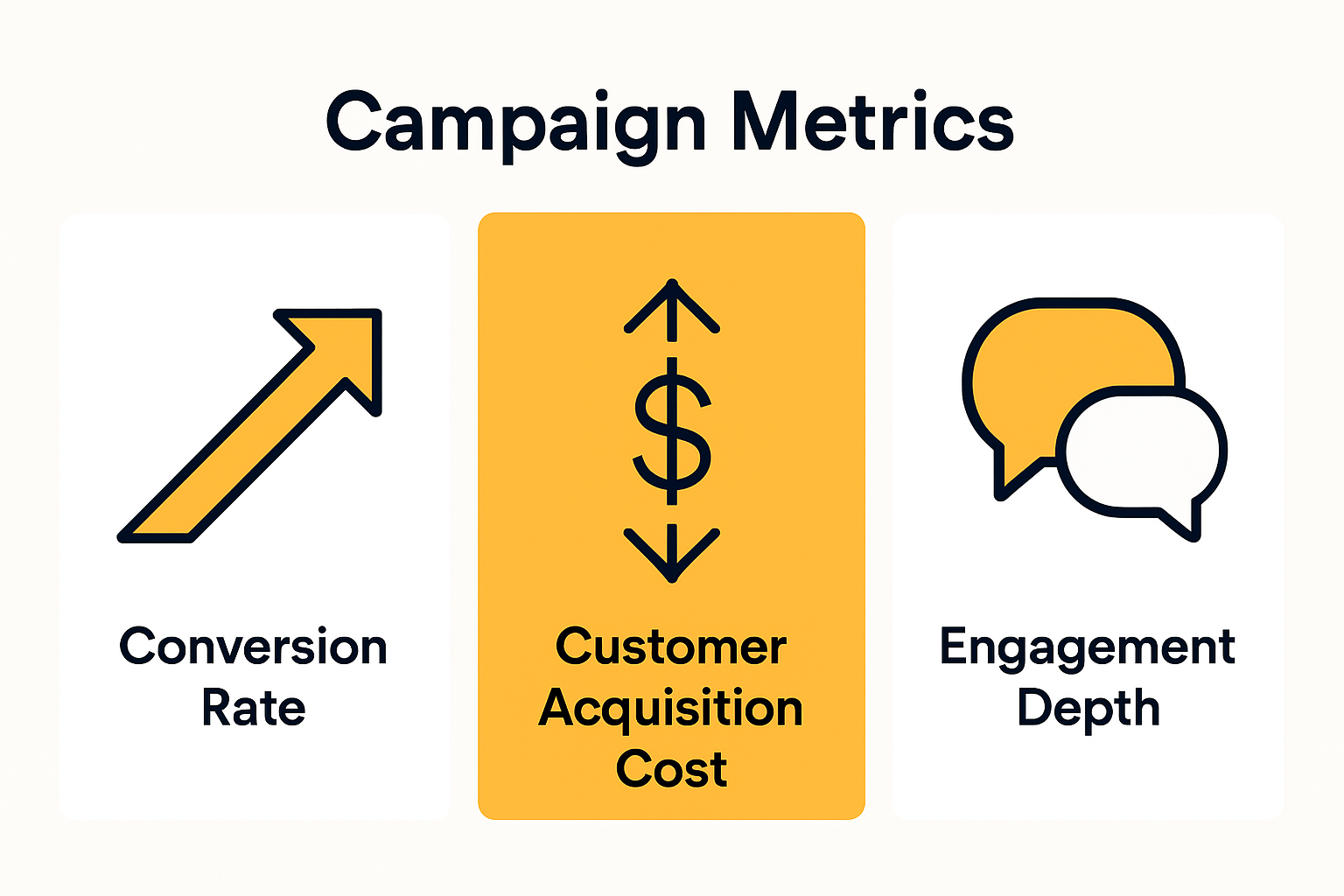
- Conversion Rate: Tracking actual customer actions beyond surface-level engagement
- Customer Acquisition Cost: Understanding true investment per new customer
- Return on Marketing Investment (ROMI): Calculating net profit generated
- Engagement Depth: Measuring quality of interactions, not just quantity
Research from ArXiv warns about the potential risks of AI-generated disinformation that can skew marketing analytics, underscoring the importance of robust data validation. Conversion Metric Benchmarks: Complete Guide 2025 highlights that successful measurement goes beyond raw numbers, requiring contextual understanding and continuous refinement of analytical approaches. Marketers must develop sophisticated strategies that balance quantitative metrics with qualitative insights to truly understand campaign performance.
Boost Your Digital Marketing with Fast and Simple A/B Testing
Emerging trends like AI-driven personalization and real-time content optimization demand marketers to experiment quickly and effectively. If you want to stay ahead by using data-driven insights and continuous testing to refine your strategies, tackling complex tools should not be a barrier. The challenge is achieving precise audience targeting and measuring true campaign success without slowing down your website or needing advanced technical skills.
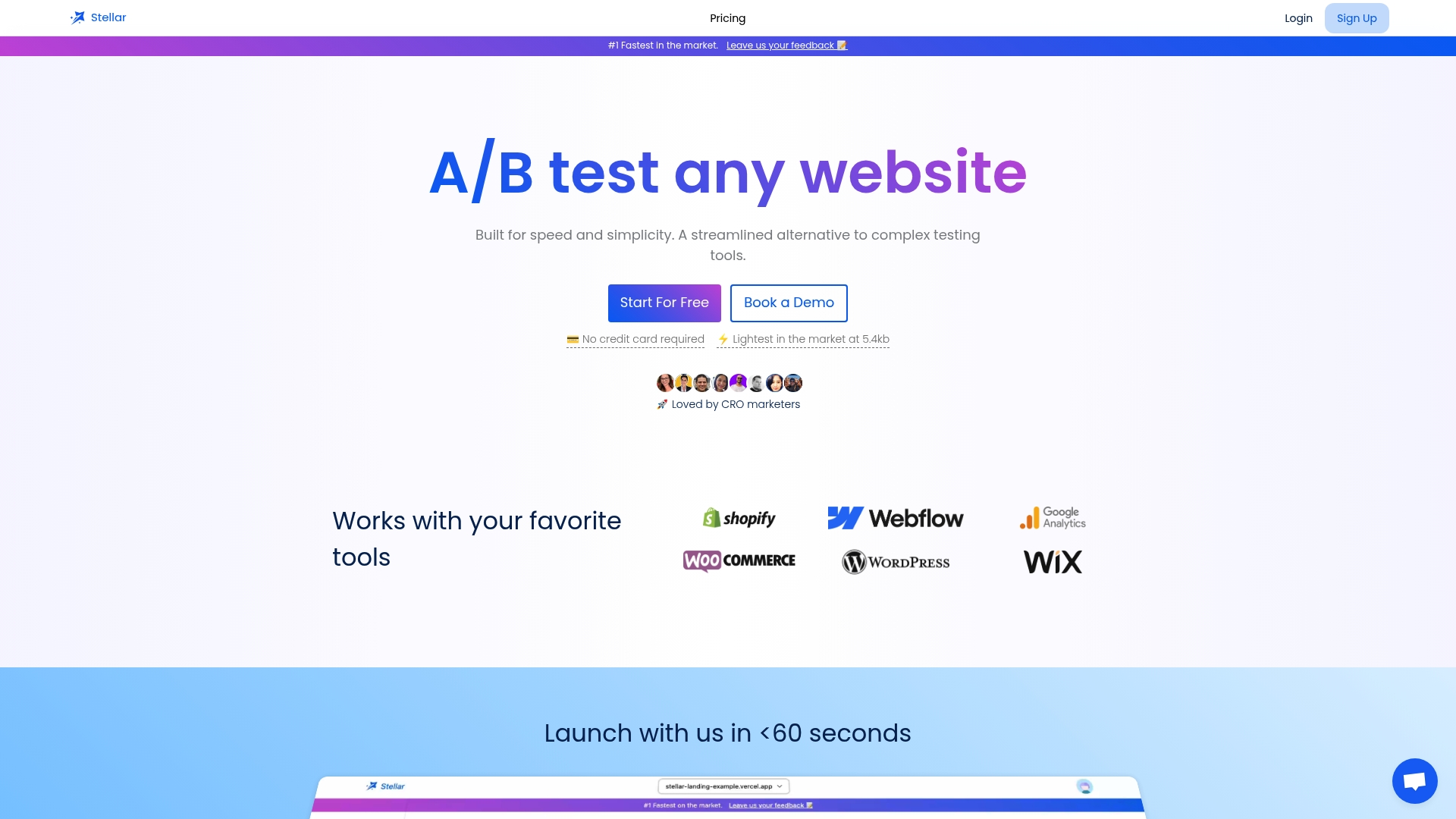
Experience the power of Stellar's A/B Testing Tool built specifically for marketers and growth hackers who need speed and simplicity in one solution. With a lightweight script that keeps your site running smoothly, a no-code visual editor, and real-time analytics you can trust, you will create personalized campaigns that deliver results. Take control of your digital marketing now with advanced goal tracking and dynamic keyword insertion tailored to your business. Visit Stellar today and start testing smarter to master the evolving digital landscape.
Frequently Asked Questions
What are the major trends reshaping digital marketing today?
Key trends include the use of artificial intelligence and machine learning for personalized marketing, voice search optimization, privacy-centric marketing, and advancements in video marketing techniques.
How is AI transforming digital marketing strategies?
AI is fundamentally changing digital marketing by enabling predictive analytics, personalized recommendation engines, AI-powered customer interactions, and real-time content optimization, allowing businesses to create deeply personalized marketing experiences.
What challenges do marketers face regarding data privacy and user trust?
Marketers must address concerns related to transparent data collection, robust consent mechanisms, data security protocols, and ensuring algorithmic fairness to maintain user trust while leveraging personalization strategies.
How can marketers effectively measure the success of their campaigns?
Marketers should focus on key metrics such as conversion rates, customer acquisition costs, return on marketing investment (ROMI), and engagement depth to gain valuable insights into campaign performance and refine their strategies accordingly.
Recommended
- 7 Proven Growth Hacking Strategies 2025 for Marketers
- 7 Key Digital Marketing Trends 2025 for Malaysian Buyers - Projector Display
- Comprendre le rôle de la vidéo dans le marketing digital
Published: 11/29/2025