
Marketing Automation Basics: Boost Conversions 42% via A/B Testing
You've probably heard that A/B testing requires coding skills. This misconception stops 42% of SMB marketers from experimenting. The truth? Modern marketing automation with no-code A/B testing platforms can dramatically boost your conversion rates without touching a line of code. This guide walks you through marketing automation basics tailored for small to medium businesses seeking efficient, practical solutions to optimize user experience and grow revenue.
Table of Contents
- Introduction to Marketing Automation
- How A/B Testing Fits into Marketing Automation
- Technical Aspects of Marketing Automation Tools
- Common Misconceptions About Marketing Automation and A/B Testing
- Choosing the Right Marketing Automation Tool for SMBs
- Best Practices for Implementing A/B Testing with Marketing Automation
- Conclusion: Driving Growth with Marketing Automation Basics
- Explore Stellar's Marketing Automation Solutions
- Frequently Asked Questions
Key Takeaways
| Point | Details |
|---|---|
| Marketing automation removes technical barriers | Software handles repetitive marketing tasks and measurements automatically, freeing your team for strategy. |
| Lightweight A/B testing tools fit SMB needs | Tools under 6KB script size protect website speed while enabling powerful experimentation. |
| Free tiers support cost-effective testing | Plans covering up to 25,000 monthly visitors let SMBs experiment without upfront investment. |
| Clear goals and real-time analytics drive success | Defining KPIs before testing and monitoring results continuously improves outcomes. |
| No-code visual editors eliminate dev dependencies | Marketers create and launch tests independently using drag-and-drop interfaces. |
Introduction to Marketing Automation
Marketing automation uses software to automate marketing tasks and measure their effectiveness. Instead of manually sending emails or tracking campaign performance, automation platforms handle these processes systematically. This approach gives SMBs a competitive edge without requiring large marketing teams or enterprise budgets.
The core principles center on data-driven experimentation, optimizing user experience, and seamless integration with existing tools. You collect visitor behavior data, test variations of marketing content, and refine campaigns based on what actually works. Marketing automation helps SMBs run efficient campaigns through streamlined workflows and data-driven decisions.
Typical automation capabilities relevant to SMBs include:
- Email triggers that respond to visitor actions automatically
- Audience segmentation based on behavior or demographics
- A/B testing of landing pages, calls-to-action, and email subject lines
- Dynamic content personalization using visitor attributes
- Real-time analytics dashboards showing campaign performance
Automation simplifies both execution and measurement. You set up workflows once, then the software runs campaigns and tracks results continuously. This efficiency lets small teams compete with larger competitors by moving faster and making smarter decisions. As marketing automation trends evolve, SMBs gain access to increasingly sophisticated tools at accessible price points.
How A/B Testing Fits into Marketing Automation
A/B testing compares two or more content versions to identify which drives better engagement and conversions. You show variant A to half your visitors and variant B to the other half, then measure which performs better against your goals. This experimentation method sits at the heart of effective marketing automation.
Common A/B test types for SMB marketing include:
- Landing page headlines and hero images
- Call-to-action button colors, text, and placement
- Email subject lines and preview text
- Form length and field requirements
- Product page layouts and descriptions
Marketing automation tools simplify every stage of testing. They handle traffic splitting, track conversions automatically, and calculate statistical significance. You don't need to manually segment audiences or crunch numbers in spreadsheets. The software does the heavy lifting.

No-code visual editors revolutionize test creation for marketers. Instead of writing code or filing developer tickets, you use drag-and-drop interfaces to modify page elements. Change a headline, swap an image, or reposition a form in minutes. This independence accelerates iteration cycles dramatically. A/B testing for small businesses becomes accessible to any marketer willing to experiment.
Automated testing improves marketing ROI by removing guesswork. You discover what actually resonates with your audience rather than relying on opinions or best practices that may not apply to your specific situation. Each test teaches you something valuable about visitor preferences, letting you compound improvements over time.
Technical Aspects of Marketing Automation Tools
Script size determines how much data visitors download to run your automation tool. Larger scripts delay page loading, hurting both user experience and search engine rankings. Bloated A/B testing scripts can increase bounce rates by up to 15% due to slower load times. Every millisecond counts when visitors decide whether to stay or leave.
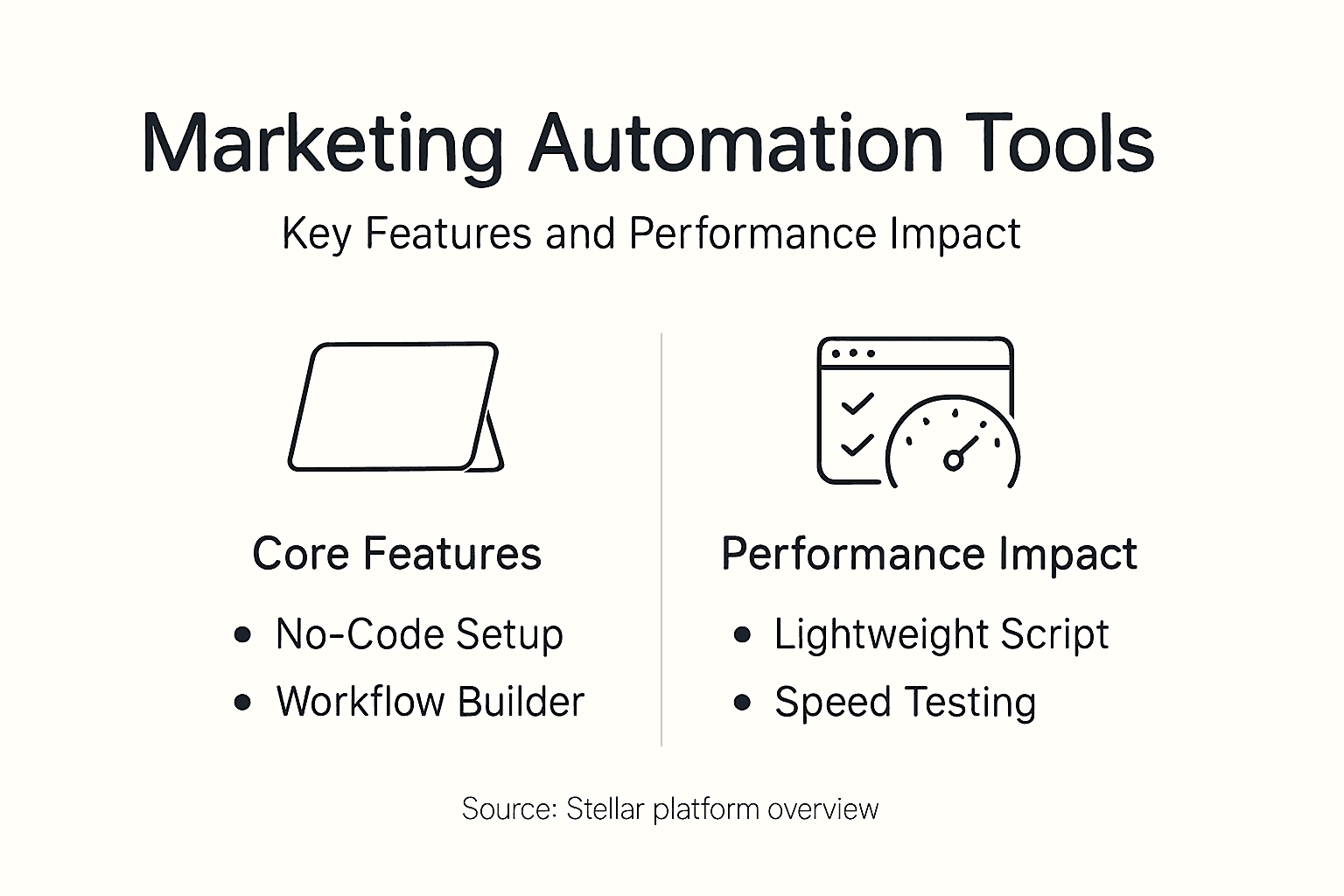
Comparing lightweight A/B testing platforms reveals dramatic differences:
| Tool Type | Script Size | Load Impact | Feature Focus |
|---|---|---|---|
| Lightweight modern tools | 5-8 KB | Minimal delay | Essential testing, fast execution |
| Mid-weight platforms | 12-20 KB | Noticeable on slower connections | Balanced features and performance |
| Legacy enterprise tools | 25-50 KB | Significant slowdown risk | Advanced features, complex setups |
Tradeoffs exist between script size and functionality. Smaller scripts focus on essential features like variant testing, goal tracking, and basic personalization. Heavier tools offer advanced segmentation, multivariate testing, and extensive integrations. For most SMBs, essential features deliver better results because they protect website performance.
Choosing tools designed with SMB performance constraints in mind prevents problems before they start. Look for platforms that:
- Publish their script size transparently
- Load asynchronously to avoid blocking page rendering
- Use efficient code optimized for speed
- Offer performance monitoring within the platform
Pro Tip: Always test script load impact on a staging site before full deployment. Use browser developer tools to measure page load times with and without the automation script. If you see more than 200ms added delay, consider a lighter alternative or contact support for optimization guidance.
Common Misconceptions About Marketing Automation and A/B Testing
Myths prevent capable marketers from adopting valuable tools. Let's clear up the most damaging misconceptions holding SMBs back from growth opportunities.
The biggest myth claims coding skills and developer teams are required for A/B testing. 42% of SMB marketers believe A/B testing requires advanced coding, which is completely false. Modern platforms provide visual editors where you point, click, and edit just like using a website builder. You modify existing page elements without touching code. A/B testing without dev support is now the norm, not the exception.
Cost misconceptions create another barrier. Many marketers assume automation platforms require enterprise budgets with five-figure annual commitments. Reality looks different. Numerous tools offer free plans for businesses with modest traffic, and paid tiers start around $50 monthly. These accessible price points match SMB budgets perfectly.
Some believe marketing automation only benefits large enterprises with massive customer bases. Wrong again. SMBs gain proportionally larger benefits because automation multiplies the output of small teams. A two-person marketing department can execute campaigns that previously required six people.
Website slowdown fears stop others from trying automation tools. While valid concerns existed with older platforms, modern lightweight scripts add negligible load time. Choosing tools under 6KB keeps your site fast while enabling powerful experimentation.
These myths cause unnecessary delays in marketing optimization. Every month spent hesitating is a month of lost conversion improvements and revenue growth. The barriers you imagine largely don't exist anymore. Tools evolved specifically to remove the obstacles that once made automation difficult for smaller businesses.
Choosing the Right Marketing Automation Tool for SMBs
Selecting the right platform requires evaluating several key criteria that directly impact your success. Prioritize ease of use above all else. If your team can't figure out the interface quickly, the tool won't get used regardless of its capabilities. No-code interfaces let marketers work independently without technical training.
Script impact on website performance ranks equally important. Tools adding more than 10KB to page weight risk hurting conversion rates more than testing improves them. This defeats the entire purpose. Check published script sizes before signing up.
Pricing models matter significantly for SMB budgets. Free tiers for up to 25,000 monthly visitors enable experimentation without upfront costs. You prove value before paying anything. Tiered pricing that scales with traffic lets you grow affordably rather than hitting sudden price jumps.
Essential features to evaluate include:
- Visual editor for creating test variants without coding
- Dynamic keyword insertion for personalizing landing pages
- Real-time analytics showing test results as they happen
- Goal tracking for conversions, clicks, and custom events
- Quick setup requiring minimal technical configuration
Customer support quality separates good tools from great ones. When you're learning a new platform, responsive support saves hours of frustration. Check whether the vendor offers chat, email, or only documentation. Read reviews about support responsiveness on sites like G2 or Capterra.
Stellar exemplifies platforms meeting these criteria. It offers a free plan for businesses under 25,000 monthly visitors, maintains a tiny 5.4KB script size, and provides no-code visual editors that any marketer can use immediately. Comparing top A/B testing platforms for SMBs helps you find the best fit for your specific needs.
Recommend reading reviews from businesses similar to yours and trying demos before committing. Most platforms offer free trials. Spend a few hours testing the interface and running a simple experiment. This hands-on evaluation reveals whether the tool matches your workflow better than any sales pitch.
Best Practices for Implementing A/B Testing with Marketing Automation
Effective A/B testing requires clear goals, proper setup, dynamic personalization, and ongoing monitoring. Follow these steps to launch successful experiments that drive measurable improvements.
- Choose a lightweight, no-code tool matching your traffic volume and budget. Prioritize platforms under 10KB script size with visual editors.
- Define specific test goals and KPIs before creating variants. Know exactly what success looks like, whether that's form submissions, purchases, or email signups.
- Create test variants using the visual editor. Make one clear change per test so you know what caused any performance difference.
- Personalize content dynamically using visitor attributes like location, referral source, or device type. Dynamic keyword insertion raises relevance dramatically.
- Track results with real-time analytics. Goal tracking in A/B testing shows which variant performs better as data accumulates.
- Iterate based on insights. Apply winners broadly, then create new tests building on what you learned.
Dynamic keyword insertion deserves special attention. This technique automatically swaps placeholder text with values matching visitor context. If someone searches for "blue widgets" and clicks your ad, your landing page headline can read "Blue Widgets on Sale" instead of generic text. This personalization increases conversion rates by showing visitors exactly what they're looking for.
Monitor website performance impact continuously, not just at launch. Run periodic speed tests to ensure your automation script isn't causing slowdowns as your site evolves. Browser caching and content delivery networks help maintain fast load times.
Pro Tip: Start with simple changes to build confidence and learn from results before testing complex variations. Swap a headline or button color first. These straightforward tests teach you how the platform works and how your audience responds. Once comfortable, progress to testing page layouts or multi-step flows. Small wins compound into major improvements over time.
Conclusion: Driving Growth with Marketing Automation Basics
Marketing automation transforms how SMB marketers work by increasing efficiency and enabling data-driven decisions. You gain the ability to experiment constantly, learning what resonates with your audience rather than guessing. Better conversion rates follow naturally when you optimize based on actual visitor behavior.
Lightweight, no-code A/B testing tools remove every traditional barrier that once kept automation out of reach for smaller businesses. You don't need developers, enterprise budgets, or technical expertise. Modern platforms put powerful experimentation capabilities directly in your hands through intuitive interfaces that anyone can master quickly.
The misconceptions that once stopped marketers from trying automation no longer reflect reality. Tools evolved specifically to address SMB needs for simplicity, affordability, and performance. Every month you delay experimenting is a month of potential improvements left on the table.
Start optimizing your marketing campaigns today using the principles and practices outlined here. Choose a platform matching your needs, define clear goals for your first test, and launch. The insights you gain will guide smarter decisions across all your marketing efforts. Resources and platforms like Stellar make adoption quick and effective, letting you focus on growth rather than technical complexity.
Explore Stellar's Marketing Automation Solutions
Ready to put these marketing automation basics into practice? Stellar provides a lightweight, no-code platform designed specifically for SMB marketers seeking efficient A/B testing solutions. With a tiny 5.4KB script that won't slow your website, you can start experimenting immediately without worrying about performance impact.
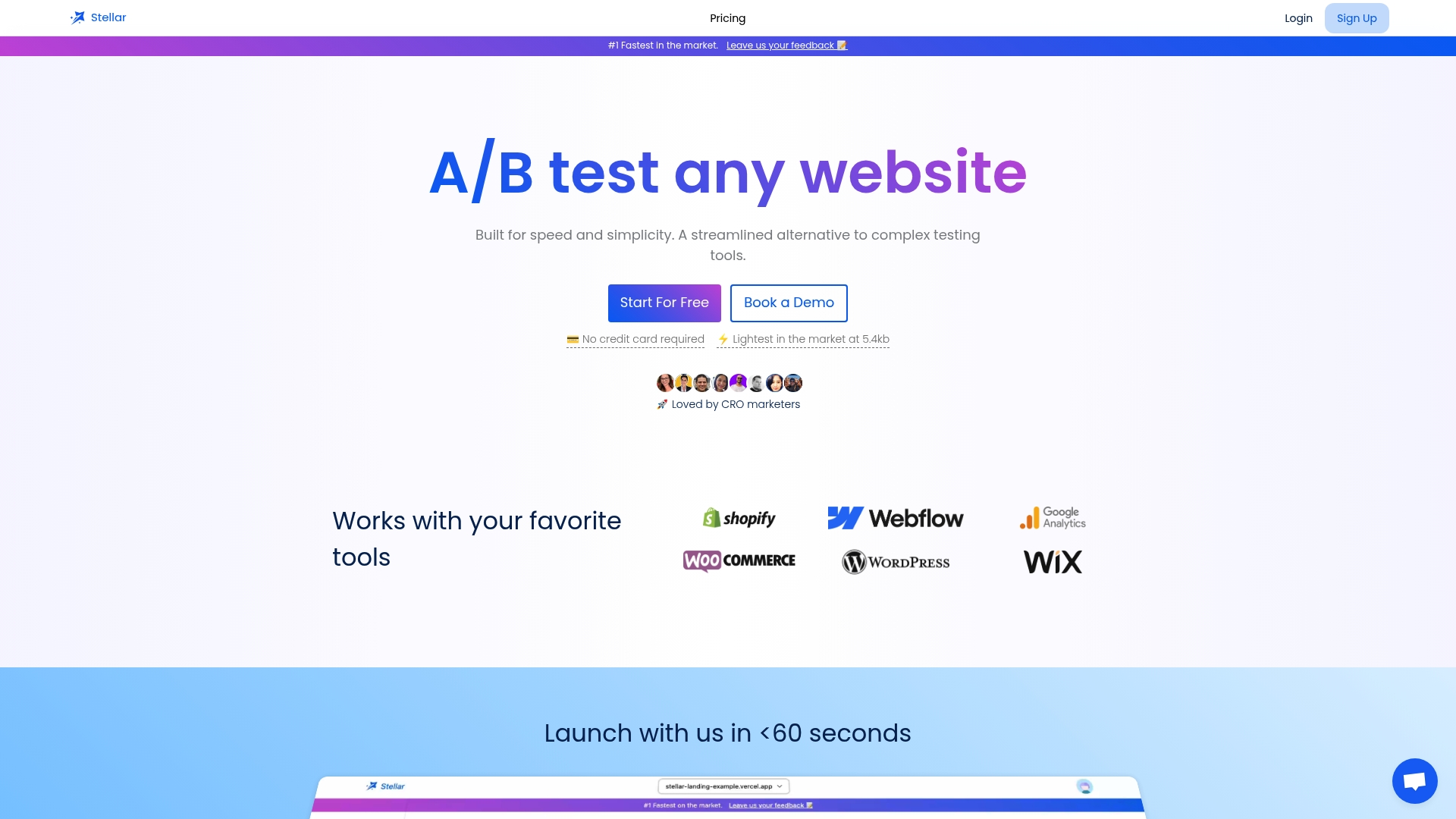
Stellar offers a free plan for businesses under 25,000 monthly visitors, removing the financial barrier to getting started. The visual editor lets you create test variants in minutes, while dynamic keyword insertion personalizes landing pages automatically based on visitor context. Real-time analytics show results as they happen, so you make informed decisions quickly.
Explore helpful resources like the A/B testing best practices guide, the landing page A/B testing guide, and comparisons of top A/B testing platforms to deepen your knowledge. Try Stellar's solutions today to improve conversion rates and simplify your testing workflow without technical headaches.
Frequently Asked Questions
Do I need coding skills to use modern A/B testing tools?
No, modern platforms provide visual editors where you modify page elements using drag-and-drop interfaces. You can change headlines, images, buttons, and layouts without writing any code. This no-code approach makes A/B testing accessible to any marketer willing to experiment.
How do free tiers work for SMB marketing automation tools?
Free tiers typically limit usage by monthly visitor count rather than features. Plans covering up to 25,000 monthly tracked visitors let small businesses experiment without paying anything. Once you exceed the visitor threshold, you upgrade to a paid tier that scales with your traffic growth.
How does script size affect my website speed and user experience?
Larger scripts require visitors to download more data before your page becomes interactive. Scripts over 20KB can add noticeable delays, especially on mobile connections. This slowdown increases bounce rates and hurts conversions. Choosing tools under 6KB protects your website performance while enabling testing.
How can I start A/B testing on a tight budget with minimal technical skills?
Choose a platform offering a free plan matching your traffic volume. Look for no-code visual editors that don't require technical setup. Start with simple tests like headline changes or button colors to build confidence. Most platforms provide tutorials and support to help you launch your first experiment within an hour.
How long does it take to see results after launching marketing automation?
Initial A/B test results often appear within days if you have decent traffic volume. Statistical significance usually requires 1-2 weeks and at least 100 conversions per variant. Long-term automation benefits compound over months as you run multiple tests and apply learnings across campaigns. Expect noticeable conversion rate improvements within the first quarter of consistent experimentation.
Recommended
- Marketing Automation + A/B Testing: Integration Guide for 2025
- Marketing Automation Trends 2025: 40% Faster A/B Testing
- Marketing Funnel Optimization for Higher Conversions
- Psychology Behind Conversions: Boosting A/B Test Success
- Data-Driven Marketing Strategies Guide to Boost AOV - Affinsy Blog | Affinsy
- Automated Marketing for Small Business: Your Guide to | BonusQR
Published: 3/2/2026