
Short vs Long Landing Pages Explained: Key Insights
Nearly 48 percent of american marketers say the ideal landing page length depends on both the product and the audience. Today, every click is precious and getting your message across quickly is more important than ever. Knowing whether to use a short or long landing page can unlock higher conversions and better customer experiences. This guide breaks down how page length shapes decisions so you can design smarter american landing pages that truly perform.
Table of Contents
- Defining Short and Long Landing Pages
- Core Differences in Structure and Content
- Conversion Rate Impact and CRO Insights
- Choosing the Right Length for Your Goals
- Common Mistakes With Landing Page Lengths
Key Takeaways
| Point | Details |
|---|---|
| Landing Page Types | Short landing pages are effective for simple, immediate actions, while long landing pages serve detailed products requiring comprehensive information. |
| Critical Factors | The choice between short and long pages depends on product complexity, audience sophistication, price point, and conversion goals. |
| CRO Insights | Successful conversion rate optimization hinges on user behavior understanding and continuous testing to refine content. |
| Common Mistakes | Avoid overwhelming users with information and ensure a clear call to action to maximize conversion potential. |
Defining Short and Long Landing Pages
In the dynamic world of digital marketing, landing pages serve as critical conversion touchpoints. According to Wikipedia, a landing page is a single web page that appears in response to a marketing promotion, search result, or online advertisement, typically displaying directed sales copy that logically extends the original advertisement.
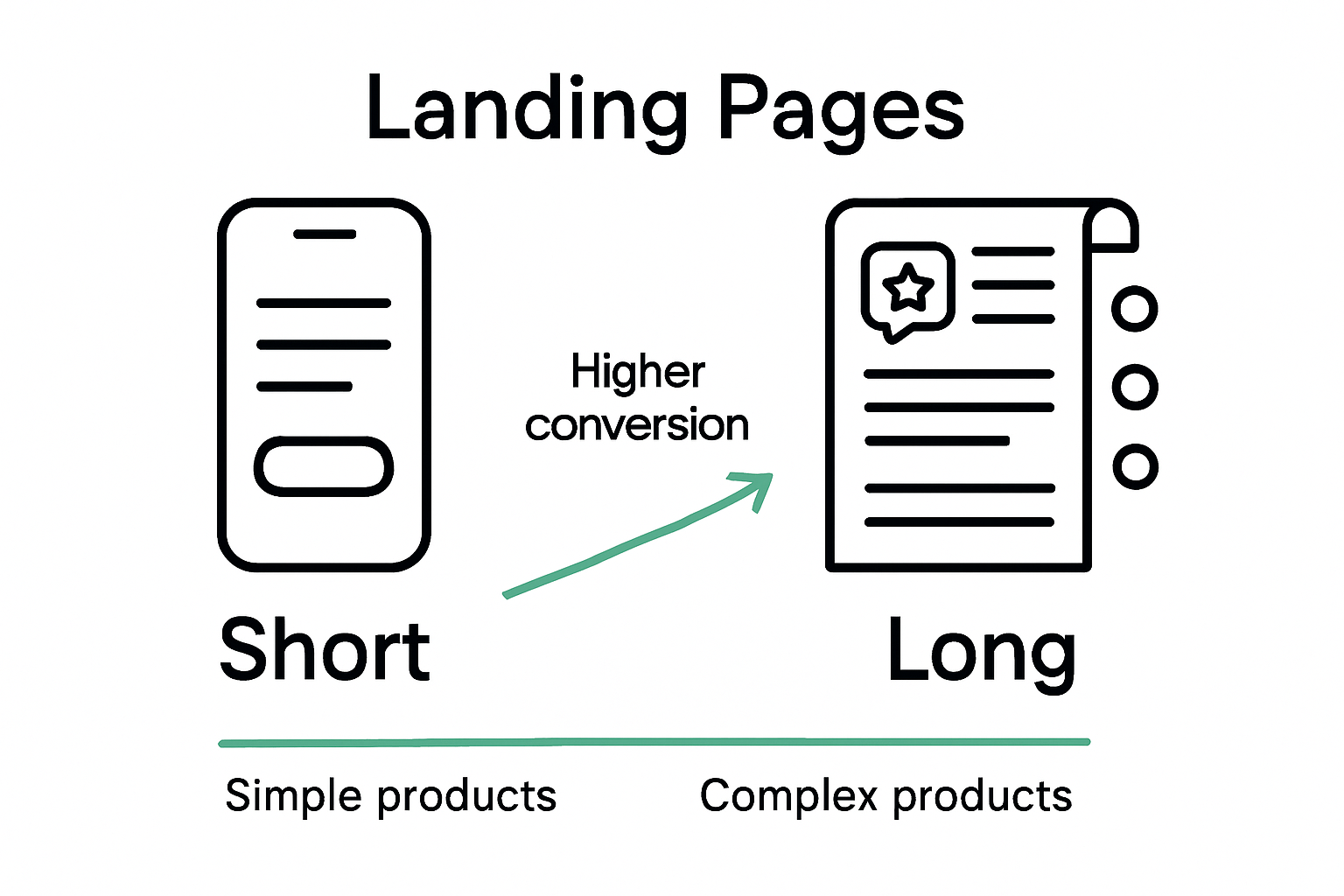
Landing pages can be broadly categorized into two primary types: short landing pages and long landing pages. A short landing page is a concise, focused web page designed to capture user attention quickly and drive an immediate action, such as signing up or making a purchase. In contrast, a long landing page provides extensive information, detailed product descriptions, multiple value propositions, and comprehensive persuasive elements to guide potential customers through a more in-depth decision-making process.
Research from IJNRD suggests that the effectiveness of landing pages depends on multiple factors including visual elements, content strategy, and persuasive techniques. The choice between a short or long landing page depends on several critical variables:
- Product Complexity: Simple products often work best with short pages, while complex offerings require more detailed explanations
- Target Audience: Technical or high-consideration audiences might prefer more information
- Price Point: Higher-priced items typically need more comprehensive landing pages
- Conversion Goal: Some actions require more persuasion, while others need immediate, streamlined experiences
Understanding these nuanced differences helps marketers craft landing pages that not only attract attention but effectively convert visitors into customers.
Core Differences in Structure and Content
The structural and content differences between short and long landing pages fundamentally impact user engagement and conversion strategies. Short landing pages prioritize minimalism and rapid comprehension, while long landing pages dive deep into comprehensive information delivery. Research from ArXiv highlights that the amount of information provided directly influences users' willingness to take action, making content strategy crucial.
In structural terms, short landing pages typically feature:
- Concise headline
- Minimal text blocks
- Single, clear call-to-action (CTA)
- Simplified form
- Limited visual elements
Conversely, long landing pages incorporate:
- Multiple sections with detailed explanations
- Comprehensive product descriptions
- Several CTAs at different scroll points
- Social proof elements
- Testimonials and case studies
- Extensive feature breakdowns
According to MDPI, text readability and content structure play significant roles in conversion rates. The key is matching page length to the complexity of your offering and the specific needs of your target audience.

The decision between short and long landing pages isn't universal. Some industries and products demand more explanation, while others benefit from streamlined, quick-hit messaging. Marketers must carefully analyze their specific context, considering factors like product complexity, price point, and target audience sophistication to determine the most effective landing page approach.
Conversion Rate Impact and CRO Insights
Converting website visitors into customers remains the primary objective of any landing page strategy. According to Sellers Commerce, minimizing distractions and strategically managing word count can significantly impact conversion rates. Conversion Rate Optimization (CRO) is not a one-size-fits-all approach but a nuanced process of understanding user behavior and page performance.
Short and long landing pages each present unique conversion dynamics. Short landing pages typically excel with:
- Faster loading times
- Reduced cognitive load
- Immediate value proposition
- Quick decision-making paths
Long landing pages can drive conversions through:
- Comprehensive information
- Building trust via detailed explanations
- Multiple touchpoints for engagement
- Addressing potential customer objections
Understanding conversion metrics requires a strategic approach. Interpreting Conversion Metrics becomes crucial in determining which landing page structure will most effectively convert your specific audience. The key is not page length, but relevance, clarity, and alignment with user expectations.
Successful CRO demands continuous testing and iteration. Marketers must remain agile, using data-driven insights to refine their landing pages, ensuring that every element is optimized to guide potential customers smoothly through the conversion funnel.
Choosing the Right Length for Your Goals
Selecting the optimal landing page length requires a strategic approach deeply rooted in understanding your specific business objectives and target audience. According to Involve, content and design elements critically impact conversion, with clarity and focus being paramount in structuring effective landing pages.
Decision Factors for Landing Page Length include:
- Product Complexity
- Target Audience Sophistication
- Price Point of Offering
- Sales Cycle Duration
- Customer Decision-Making Process
Hostinger highlights that conversion rates fluctuate significantly across industries, emphasizing that there's no universal template for landing page success. For instance:
- Low-Cost Products: Often benefit from shorter, more direct landing pages
- High-Ticket Services: Typically require comprehensive, detailed explanations
- Technical Products: Usually demand more in-depth information
- Impulse Purchases: Work best with concise, compelling messaging
Practical recommendation involves creating adaptive landing pages that dynamically adjust content based on user interaction and engagement signals. This means starting with a core message and allowing users to dive deeper if they demonstrate continued interest. The ultimate goal is crafting an experience that feels personalized, informative, and frictionless, guiding potential customers smoothly toward conversion.
Common Mistakes With Landing Page Lengths
Landing page design is a delicate balance of information and persuasion, where even minor missteps can dramatically impact conversion potential. According to Sender, one of the most critical errors marketers make is including multiple offers, which can potentially decrease conversion rates by an astonishing 266%.
Critical Landing Page Length Mistakes include:
- Overwhelming visitors with too much information
- Lack of clear, singular value proposition
- Inconsistent messaging across page sections
- Neglecting mobile responsiveness
- Ignoring page loading speed
Lander Lab emphasizes that page speed significantly influences user behavior and conversion rates. Slow-loading pages, regardless of length, can instantly derail potential customer interactions. This means that both short and long landing pages must prioritize performance optimization.
The most damaging mistakes often stem from a misunderstanding of audience needs. Short landing pages can fail by being too cryptic, while long pages can collapse under their own informational weight. Successful landing pages strike a precise balance: providing enough context to build trust, while maintaining laser focus on guiding users toward a specific conversion goal. This requires ruthless editing, strategic information hierarchy, and a deep understanding of your target audience's decision-making process.
Optimize Your Landing Pages with Data-Driven A/B Testing
Choosing between short and long landing pages can be confusing especially when product complexity and audience needs vary. This article highlights that there is no one-size-fits-all solution and emphasizes the importance of matching page length to your marketing goals. If you are struggling with finding the right balance or want to boost conversion rates without overwhelming visitors, it is time to leverage a powerful, easy-to-use tool that simplifies experimentation.
Stellar's A/B Testing Tool is designed exactly for marketers and growth hackers who want to optimize landing page performance with minimal fuss. Our lightweight platform lets you quickly test multiple landing page versions including variations in length, content structure, and call-to-actions. With features like a no-code visual editor and dynamic keyword insertion, you can tailor pages precisely to your audience’s expectations while tracking real-time results to make confident decisions.
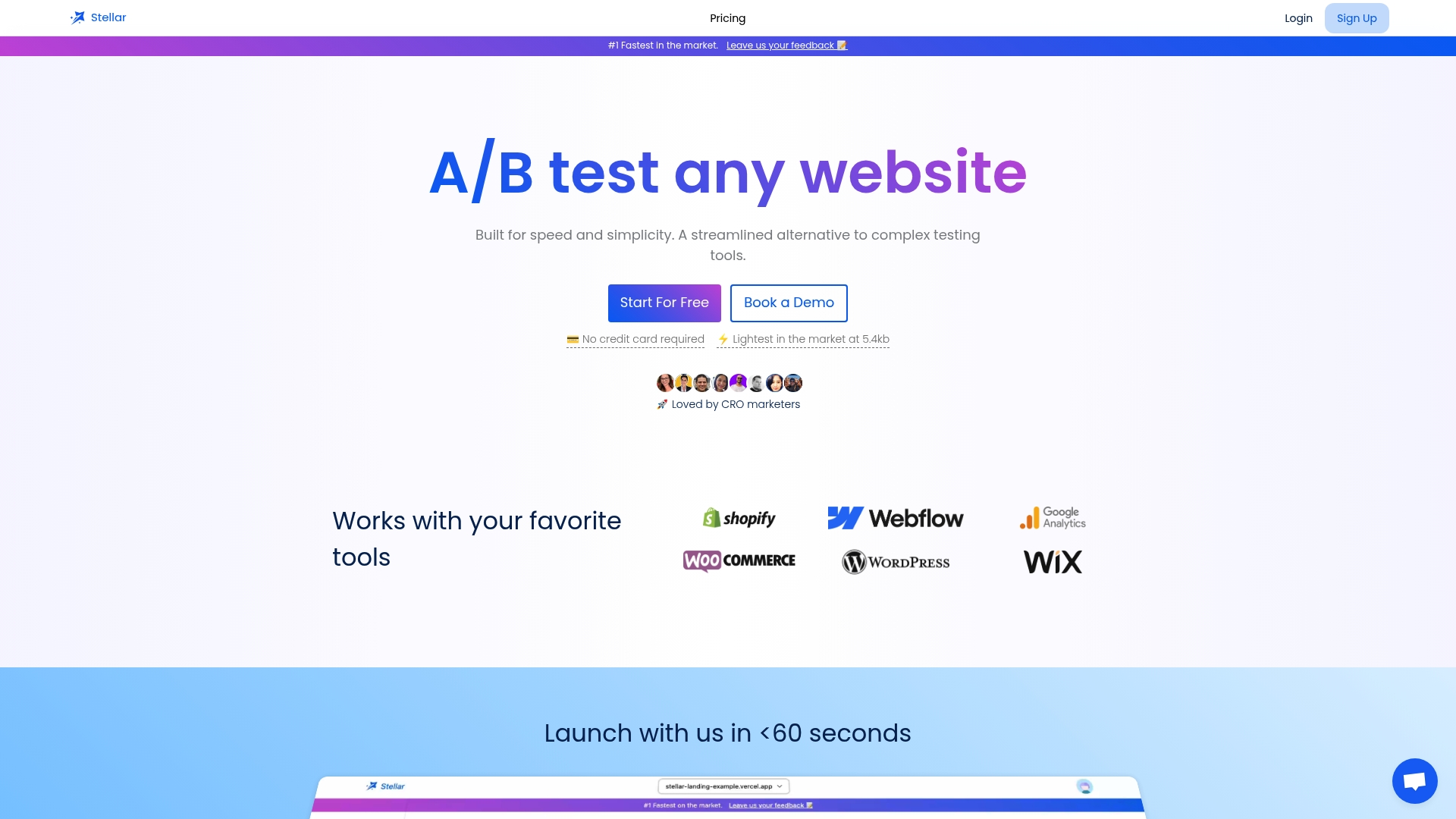
Discover how you can fine-tune your landing pages with Stellar to increase conversions by testing different messaging strategies and formats. Start now with our free plan and see immediate improvements in engagement and sales. Visit Stellar Landing Page to begin your testing journey. Experience the fastest, most intuitive A/B testing platform that supports your specific goals in landing page optimization.
Frequently Asked Questions
What are the main differences between short and long landing pages?
Short landing pages focus on concise messaging and a single call-to-action, making them ideal for straightforward products or quick conversions. Long landing pages, on the other hand, provide detailed information and multiple touchpoints to help potential customers who may require more insights before making a decision.
When should I use a short landing page?
Short landing pages are best suited for simple products, low-cost items, or situations where immediate action is required. They are effective when your audience is likely to make quick decisions without needing extensive information.
What factors should I consider when creating a long landing page?
When designing a long landing page, consider product complexity, target audience sophistication, price point, and the overall sales cycle duration. Provide comprehensive information to build trust and address any potential objections your audience may have.
How can I optimize my landing page for conversions?
To optimize your landing page for conversions, reduce distractions, focus on clarity, and ensure your messaging aligns with your audience's needs. Conduct continuous testing to refine page elements and improve user engagement effectively.
Published: 11/30/2025