
UTM Parameters Explained: Smarter Campaign Tracking
Misunderstanding UTM parameters holds back effective marketing for thousands of American businesses and their global peers. Accurate campaign tracking matters because even a small reporting error can skew investments and strategy. UTM-enabled links provide detailed insights that reveal where website visitors come from and which platforms actually convert traffic. With nearly half of marketers admitting to confusion over UTM usage, this guide clears up common misconceptions and shares practical ways to simplify tracking for any e-commerce team.
Table of Contents
- UTM Parameters Defined And Common Misconceptions
- Five Core UTM Types And Their Purposes
- How UTM Parameters Power Campaign Analysis
- Manual Vs. Automated UTM Tagging Methods
- Common Mistakes And Best Practice Standards
Key Takeaways
| Point | Details |
|---|---|
| Understanding UTM Parameters | UTM parameters are essential for tracking marketing campaigns and analyzing traffic sources. Each parameter has a specific function that provides insight into campaign performance. |
| Adopt Standardized Practices | Creating a standardized UTM naming convention is crucial for consistent tracking and analysis across all marketing efforts. |
| Choose Appropriate Tagging Methods | Organizations should weigh the benefits of manual vs. automated UTM tagging based on their scale and needs to optimize tracking efficiency. |
| Avoid Common Mistakes | To maintain data integrity, marketers should implement best practices like using clear naming conventions and reserving UTM parameters for external links only. |
UTM Parameters Defined and Common Misconceptions
Understanding UTM parameters is crucial for digital marketers seeking precise campaign tracking insights. These specialized text snippets attached to URLs act as tracking codes that provide granular data about website traffic sources, helping businesses understand exactly where their visitors originate. Campaign tracking strategies reveal these parameters as powerful tools for dissecting marketing performance.
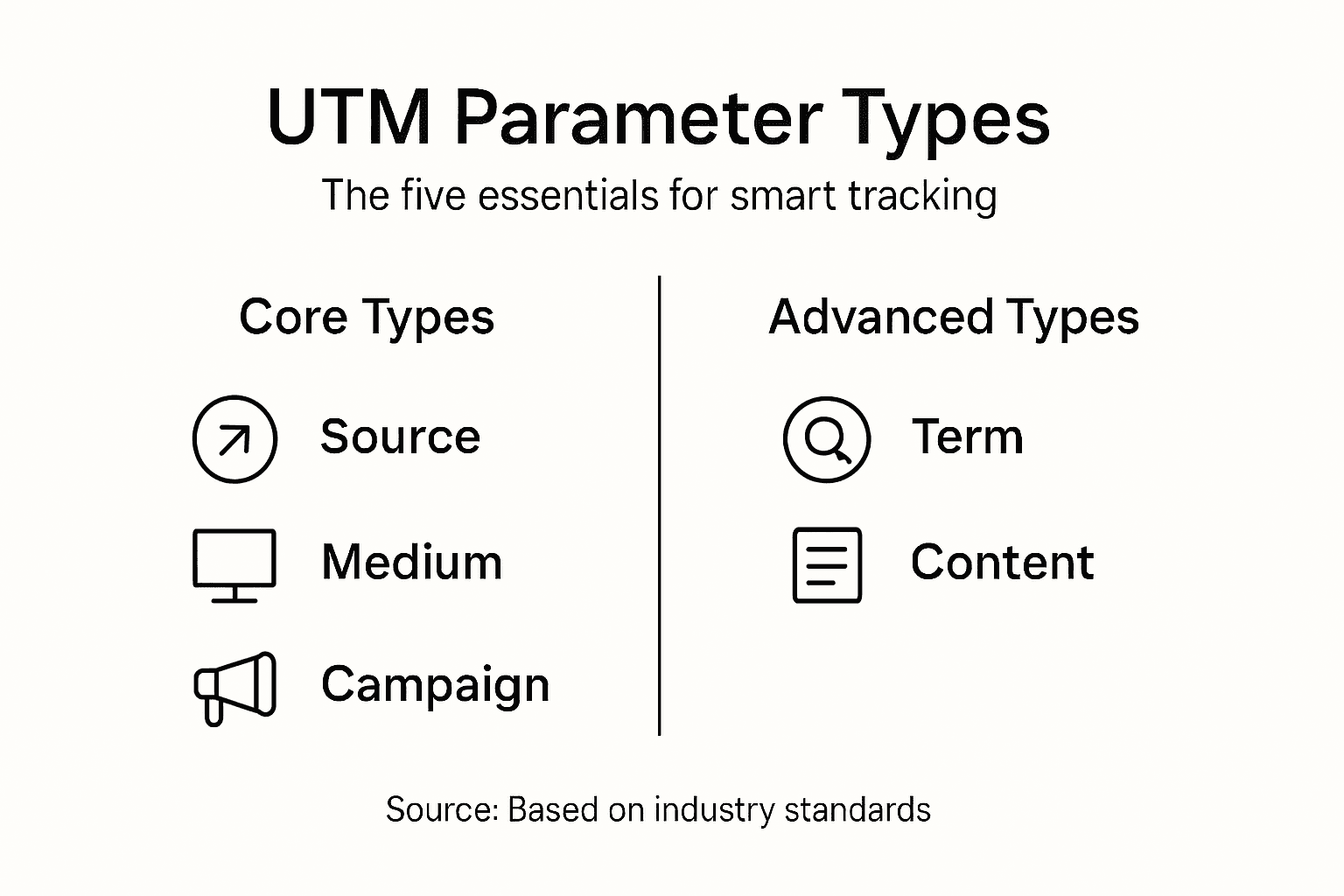
UTM parameters consist of five standard components that help marketers capture specific campaign details: source, medium, campaign, term, and content. Each parameter serves a unique purpose in tracking digital marketing efforts. The source parameter identifies which platform sent the traffic (like Google or Facebook), the medium explains the marketing channel type (such as email or social media), and the campaign name distinguishes specific marketing initiatives. Additional parameters like term and content offer even more nuanced tracking capabilities.
Many marketers harbor misconceptions about UTM parameters that can limit their effectiveness. Contrary to popular belief, UTMs are not complex technical tools reserved for advanced analysts. Marketing tracking techniques demonstrate that anyone can implement these tracking codes with minimal technical expertise. Modern digital marketing platforms and URL builders make creating UTM-enabled links remarkably straightforward, allowing businesses of all sizes to gain deep insights into their campaign performance.
Pro tip: Create a standardized UTM naming convention for your team to ensure consistent and clean tracking data across all marketing channels.
Five Core UTM Types and Their Purposes
Digital marketers rely on five core UTM parameters to track and analyze their marketing campaigns with precision. Advanced tracking techniques reveal these parameters as essential tools for understanding traffic sources, campaign performance, and visitor behavior. Each parameter serves a unique function in providing comprehensive insights into marketing efforts.
The five core UTM parameters break down as follows: utm_source identifies the specific platform driving traffic (like Google, Facebook, or a newsletter), utm_medium describes the marketing channel type (such as email, social media, or cost-per-click advertising), utm_campaign distinguishes the specific marketing initiative or promotion, utm_term tracks paid keyword details, and utm_content differentiates between multiple content variations within the same campaign. UTM parameter strategies demonstrate how these components work together to create a comprehensive tracking mechanism.

Implementing these UTM parameters requires careful attention to naming conventions and consistency. Marketers should create a standardized approach that allows for easy tracking and analysis across different platforms and campaigns. For instance, using lowercase letters, avoiding spaces (replacing them with hyphens or underscores), and maintaining a clear, descriptive naming structure can significantly improve data clarity and reporting accuracy.
Pro tip: Create a master spreadsheet that documents your UTM parameter naming conventions to ensure team-wide consistency and prevent tracking errors.
Here's a concise summary of the five core UTM parameters and their impact on campaign analysis:
| UTM Parameter | What It Tracks | Example Value | Business Impact |
|---|---|---|---|
| utm_source | Traffic origin platform | Google, Facebook | Identifies top referral sites |
| utm_medium | Marketing channel type | Email, CPC | Reveals channel effectiveness |
| utm_campaign | Specific campaign or promo | Spring-sale | Assesses initiative performance |
| utm_term | Paid search keywords | digital-marketing | Optimizes ad keyword spend |
| utm_content | Content version or variant | banner1, textlink2 | Tests creative effectiveness |
How UTM Parameters Power Campaign Analysis
Marketing teams leverage UTM parameters as powerful analytical tools that transform raw web traffic data into actionable strategic insights. Campaign tracking insights reveal how these small text snippets enable precise connection between marketing efforts and actual website performance. By attaching these parameters to URLs, marketers can track exactly which campaigns, platforms, and content pieces generate genuine visitor engagement.

The real power of UTM parameters lies in their ability to break down complex marketing data into clear, measurable components. Marketing automation strategies demonstrate how these tracking codes help businesses understand precise conversion paths, enabling more intelligent budget allocation and performance optimization. Marketers can now trace a visitor's entire journey from initial click to final conversion, identifying which specific marketing initiatives drive the most valuable traffic.
Implementing UTM parameters effectively requires a systematic approach. Digital marketing teams should establish consistent naming conventions, use lowercase letters, avoid spaces, and create clear, descriptive tags that provide immediate context. By standardizing how parameters are created and tracked, businesses can ensure clean, reliable data that supports meaningful analysis and strategic decision making.
Pro tip: Create a master UTM tracking document that outlines your organization's specific parameter naming rules to maintain data consistency across all marketing channels.
Manual vs. Automated UTM Tagging Methods
Digital marketers face a critical decision when implementing UTM tracking: choosing between manual and automated tagging methods. UTM implementation strategies reveal that each approach offers unique advantages and challenges for tracking campaign performance. Manual tagging provides granular control but increases the risk of human error, while automated methods streamline the process and enhance consistency.
Campaign tracking technologies demonstrate that automated UTM tagging tools significantly reduce the complexity of tracking implementations. These platforms can automatically generate standardized UTM parameters across multiple marketing channels, minimizing mistakes that typically occur during manual entry. Businesses with multiple marketing campaigns especially benefit from automated solutions that ensure uniform tracking and reduce the administrative burden on marketing teams.
The choice between manual and automated UTM tagging ultimately depends on an organization's specific needs. Smaller teams with limited campaigns might find manual tagging more flexible, while larger marketing departments require automated systems to manage complex, multi-channel marketing efforts. Regardless of the chosen method, maintaining consistent naming conventions, using lowercase letters, and creating clear, descriptive tags remains crucial for generating meaningful analytical insights.
Pro tip: Develop a comprehensive UTM parameter style guide that outlines your organization's tagging rules, ensuring consistency whether you use manual or automated methods.
Compare manual and automated UTM tagging to determine which suits your organization:
| Method | Strengths | Weaknesses | Best For |
|---|---|---|---|
| Manual Tagging | Full control, flexible | Prone to human error | Small teams, few campaigns |
| Automated Tagging | Fast, consistent, scalable | Requires setup, may lack nuance | Large teams, many channels |
Common Mistakes and Best Practice Standards
Marketing teams frequently encounter critical errors that can compromise the integrity of their UTM tracking efforts. Critical UTM tracking mistakes reveal that improper parameter implementation can significantly distort campaign performance data. The most common pitfalls include tagging internal links, using inconsistent naming conventions, and applying parameters without strategic consideration.
UTM parameter best practices emphasize the importance of developing a standardized approach to tracking. Marketers should establish clear guidelines that mandate lowercase parameter names, avoid unnecessary spaces, and create descriptive yet concise tags. Key recommendations include reserving UTM parameters exclusively for external links, maintaining consistent naming conventions across all marketing channels, and regularly auditing tracking implementations to ensure data accuracy.
Implementing robust UTM tracking requires a disciplined approach. Organizations should develop a comprehensive UTM parameter style guide that outlines specific rules for tag creation, specifies acceptable naming conventions, and provides templates for different types of marketing campaigns. This systematic approach helps minimize human error, ensures consistent data collection, and enables more accurate performance analysis across diverse marketing initiatives.
Pro tip: Conduct a quarterly audit of your UTM tracking setup to identify and correct any inconsistencies or potential data tracking issues.
Boost Your Campaign Tracking With Smarter Experimentation
If you are leveraging UTM parameters to decode your marketing campaign performance but struggle with inconsistent data or want to move beyond just tracking traffic to truly optimizing visitor experiences then integrating a powerful A/B testing platform is the next step. The article highlights common challenges such as maintaining clean tracking data, ensuring consistent naming conventions, and connecting campaign insights to real results. Stellar’s lightweight, user-friendly SaaS solution tackles these objectives by combining advanced goal tracking and real-time analytics with a no-code visual editor that helps marketers launch A/B tests quickly without technical headaches.

Discover why marketers and growth hackers trust Stellar to streamline their experiment workflows while making sense of their campaign data. From dynamic keyword insertion that personalizes landing pages to precise performance insights that inform budget allocations, Stellar takes your tracking efforts further. Don’t wait to turn your UTM parameter tracking into data-driven marketing success. Visit Stellar A/B Testing Tool to start optimizing your campaigns today and harness the full power of smarter marketing.
Explore how our Advanced Goal Tracking enhances campaign measurement, and use our Visual Editor to simplify test creation and improve consistency in your marketing experiments.
Frequently Asked Questions
What are UTM parameters?
UTM parameters are text snippets added to URLs that help track the effectiveness of digital marketing campaigns by providing detailed information about traffic sources, channels, and specific campaigns.
How do I create UTM parameters for my marketing campaigns?
You can create UTM parameters using online URL builders that allow you to enter the source, medium, campaign, term, and content. It's important to follow a standardized naming convention for consistency.
What are the five core UTM parameters and their purposes?
The five core UTM parameters are: 1) utm_source (tracks the origin of traffic), 2) utm_medium (identifies the marketing channel), 3) utm_campaign (distinguishes a specific campaign), 4) utm_term (tracks paid keywords), and 5) utm_content (differentiates content variations).
What are common mistakes to avoid when using UTM parameters?
Common mistakes include inconsistent naming conventions, tagging internal links instead of external ones, and neglecting to establish a standardized approach for parameter creation, which can lead to inaccurate data reporting.
Recommended
Published: 1/16/2026